Medically reviewed by Dr. Hyun Joon Lee, MD. Board-certified in Family Medicine, Integrative Holistic Medicine, and Obesity Medicine. Founder and Medical Director, SeeBeyond Medicine.
What Deep TMS Is, in Plain Terms
Deep transcranial magnetic stimulation is a noninvasive therapy that uses a magnetic coil to induce weak electrical currents in targeted brain circuits. No anesthesia is involved, and no sedation. The FDA cleared the first repetitive TMS device for depression in 2008.
That definition matters because the word "stimulation" makes people picture something far more invasive than what actually happens in the chair.
The sequence below follows a standard course. Mapping first, then one session start to finish, then the weekly schedule, the side effects and their timeline, and how response tends to build.
Visit One Is a Mapping Session
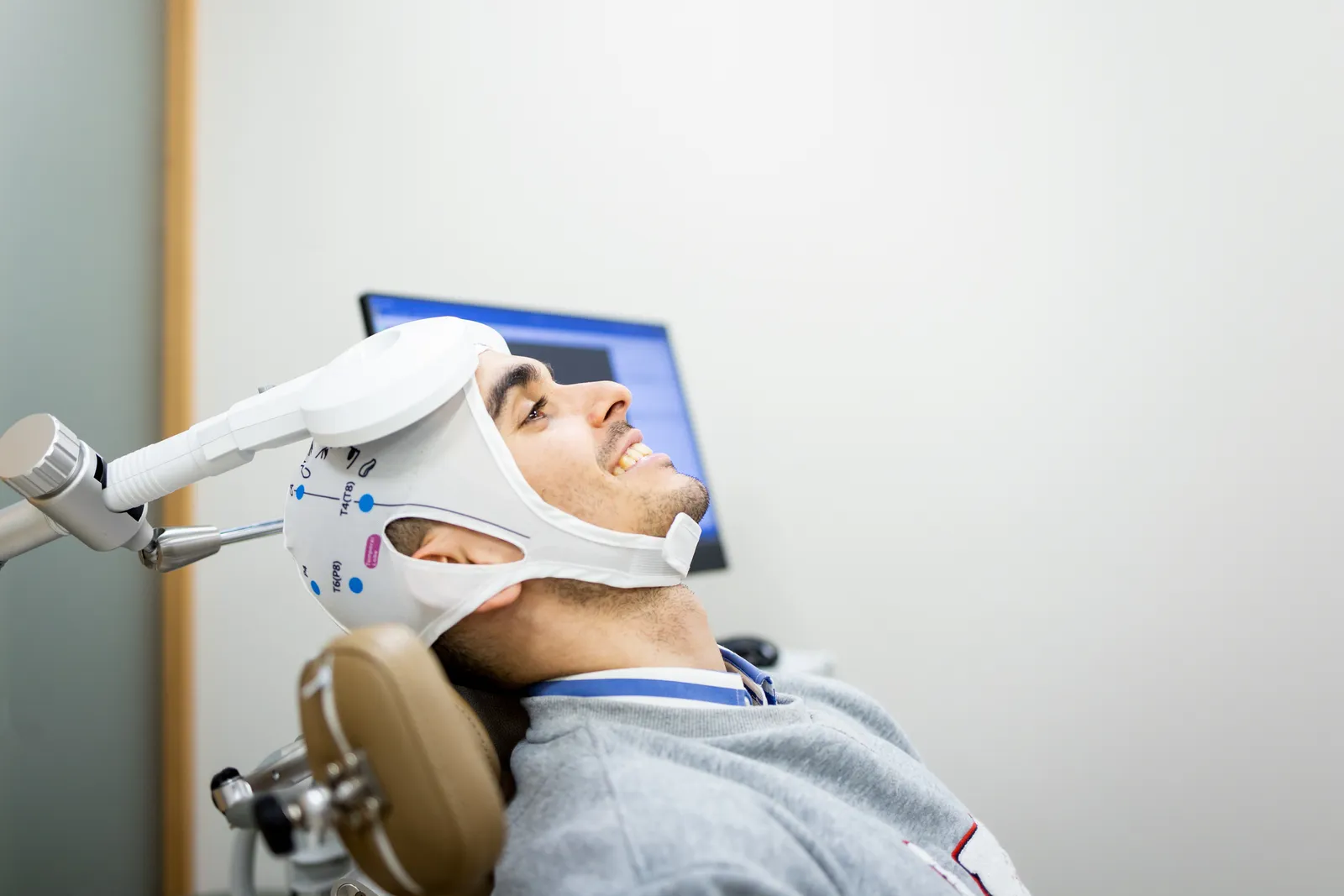
Your first appointment sets the dose rather than delivering treatment. A clinician places a cap on your head, marks measured scalp positions, and sends single pulses over the motor cortex until your thumb twitches.
That twitch defines the resting motor threshold. The StatPearls review of repetitive TMS describes it as the lowest stimulation intensity needed to evoke a small muscle response at rest.
Treatment intensity is then set as a percentage of your own threshold. Two patients sitting in the same chair on the same machine can receive different intensities, because the number is individual.
Mapping runs longer than a routine session. It may also be repeated later in the course if your response to the pulses drifts.
Screening happens before any of this. The same review lists ferromagnetic implants in the head or neck, including cochlear implants, aneurysm clips, and certain metal plates, among the reasons TMS is not appropriate. Personal and family history of seizures gets reviewed as well.
What One Session Feels Like
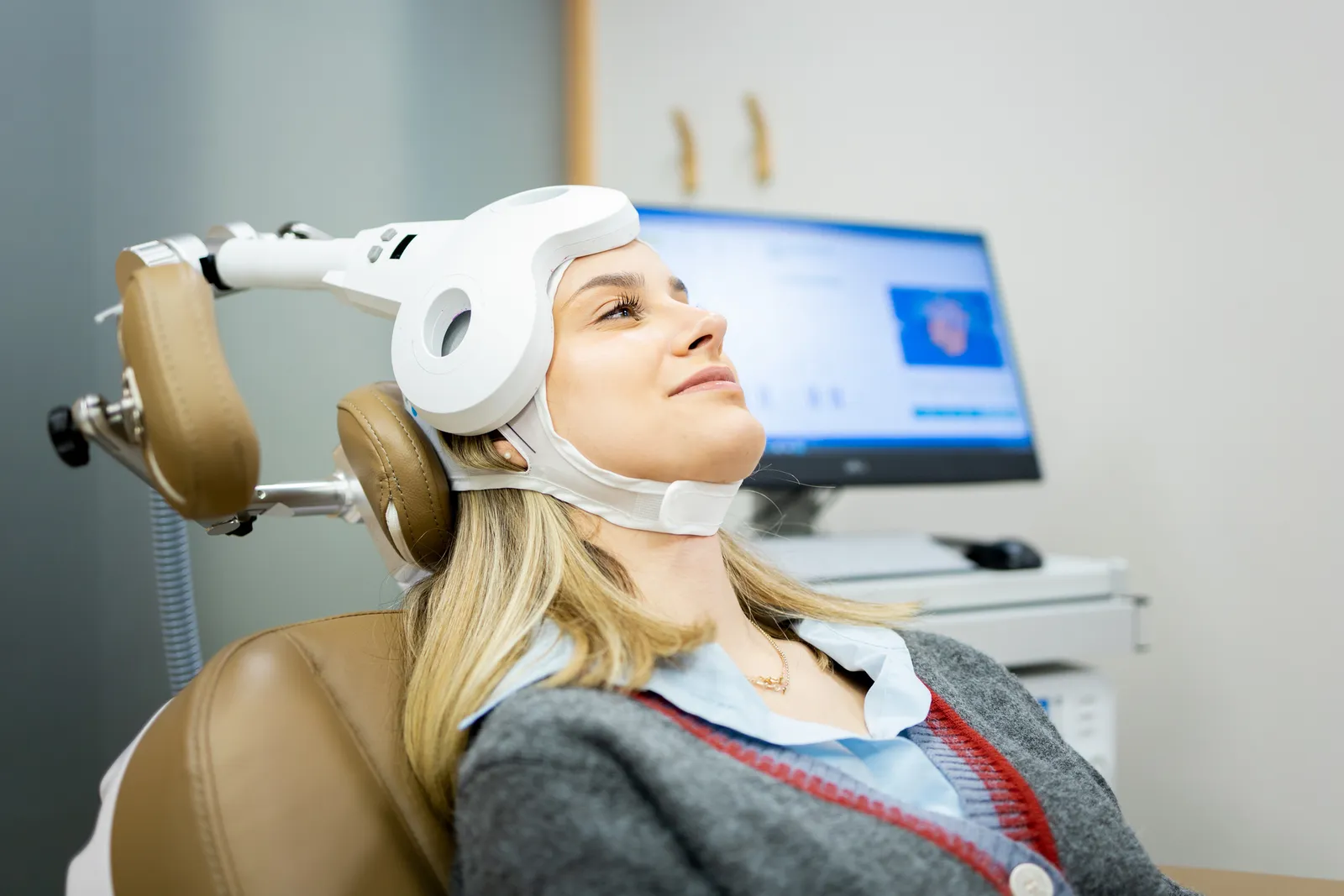
You sit upright in a treatment chair, awake, in your street clothes. A padded helmet holds the coil against your scalp. Nothing is inserted and nothing is swallowed.
The pulses feel like firm, rapid tapping on one spot on your head. Some people also feel the muscles of the scalp, jaw, or face contract with each train of pulses.
Both sensations stop when the machine stops. Neither one follows you out of the building.
The coil clicks loudly, and earplugs are not optional. StatPearls notes that TMS pulses can produce transient changes in auditory threshold, which is why hearing protection is standard for every session.
Session length depends on the protocol your physician selects. Plan for a short visit rather than an afternoon, and ask at your mapping appointment so you can schedule the rest of your day around it.
Because there is no sedation, patients typically drive themselves to and from appointments and return to work the same day.
Bring nothing special. Leave metal hair clips and heavy jewelry at home, wear something comfortable, and eat normally beforehand.
The Weekly Rhythm of a Course
Deep TMS is a series, not a single procedure. The standard depression schedule runs one session per weekday through an acute phase of roughly four weeks, followed by a tapering continuation phase.
Missing a day does not restart the clock. Tell the front desk as early as you can and the visit gets folded back into the schedule.
Shorter protocols now exist. A multisite randomized trial of accelerated H1-coil stimulation compressed the acute phase into several days of multiple daily sessions and reported non-inferiority to the standard schedule. Whether that route fits you depends on your diagnosis and your calendar.
Side Effects Are Front-Loaded
The two effects patients report most often are discomfort where the coil sits and headache afterward. StatPearls also lists neck pain, toothache, and muscle twitching during stimulation.
The timeline is the part people rarely hear in advance. In a study of pain during prefrontal theta burst stimulation, scalp pain ratings ran higher than sham on the first and fifth days but not on the final day, with most of the decline happening across the first five days.
Over-the-counter analgesics taken before a session are common practice during that first week. Ask your clinician rather than starting anything on your own.
Seizure is the most serious risk associated with TMS. The 2021 international expert safety guidelines concluded the risk is low when conventional stimulation parameters and focal coils are used, including among patients taking medications that act on the central nervous system.
When Change Tends to Show Up
Response builds. It does not arrive after one session, and it rarely arrives all at once.
A post-marketing analysis of deep TMS with the H1 coil reported a median of 16 sessions, about 21 days, before sustained response, and 17 sessions before sustained remission.
Those numbers describe a group rather than a person. Your clinician tracks symptom scales weekly so the trend becomes visible on paper before you feel it in your week.
SeeBeyond Medicine reports a 91% response rate across a deep TMS program that treats more than 30 conditions. Your own candidacy and outcome still depend on diagnosis, medication history, and prior treatment response.
Key Takeaways
- The first visit is a mapping session that sets the stimulation intensity for every session that follows.
- Sessions are done sitting upright and awake, and most people drive themselves home afterward.
- Scalp discomfort and headache are the most commonly reported side effects, and they usually fade over the first week.
- Response tends to build gradually across the course rather than appearing after a single session.
Related Resources
Start with the cluster overview if you are still deciding whether this therapy fits your situation.
- Deep TMS Therapy: A Complete Guide covers mechanism, evidence, and candidacy in depth.
- Deep TMS therapy at SeeBeyond Medicine explains how the program is structured across both offices.
- Deep TMS for anxiety and mood disorders and deep TMS for OCD describe the two indication families patients ask about most.
- Deep TMS for PTSD and deep TMS for insomnia cover the protocols aimed at trauma and sleep.
- Ketamine therapy is worth reading if you are weighing more than one route.
Most of the anxiety about deep TMS comes from not knowing the sequence. Knowing it changes the first appointment from an unknown into a schedule.
If you want the sequence mapped to your own history rather than a general article, schedule a consultation at our Scarsdale, NY office in Westchester County or our Greenwich, CT office in Fairfield County. Telemedicine visits are available for the intake conversation.
This article is for general education and does not replace a medical evaluation. Treatment decisions depend on your history, medications, and lab work. Speak with a qualified clinician before starting, stopping, or changing any therapy.