

ImmuneFrame Testing in Scarsdale, NY and Greenwich, CT
Your immune system is already fighting your cancer. The question is whether it is winning. ImmuneFrame testing at SeeBeyond Medicine in Westchester and Fairfield County quantifies that answer by mapping every immune cell population involved in tumor surveillance.
Our integrative oncology team interprets ImmuneFrame data within a root-cause treatment framework. Numbers replace assumptions.
Credentials
Triple Board-Certified Physician Leadership
SeeBeyond Medicine was founded in 2006 by Dr. Hyun Joon Lee, triple board-certified in Family Medicine, Integrative Holistic Medicine, and Obesity Medicine. Our practice has treated over 20,000 patients using a root-cause philosophy: test, don't guess.
Two Locations for ImmuneFrame Testing
Complete your immune profiling at our Scarsdale, NY office or Greenwich, CT office. We review results with the same integrative team that designed your protocol.
About This Service
What Is ImmuneFrame Testing?
ImmuneFrame is an advanced immune profiling panel that measures T-cell subsets (CD4+ helper and CD8+ cytotoxic), natural killer cells, B cells, regulatory T cells, and myeloid-derived suppressor cells. These populations determine whether your immune system recognizes and destroys cancer cells or operates in a suppressed state.
SeeBeyond Medicine uses ImmuneFrame data to evaluate cytokine balance — including Th1/Th2 ratios and inflammatory markers such as IL-6, TNF-alpha, and IFN-gamma. Cytokine profiles reveal how the tumor microenvironment is shaping your immune response.
Citation: A 2019 meta-analysis in Frontiers in Immunology found that elevated myeloid-derived suppressor cell counts correlated with reduced overall survival across 17 solid tumor types, reinforcing the clinical value of quantitative immune profiling in oncology treatment planning.
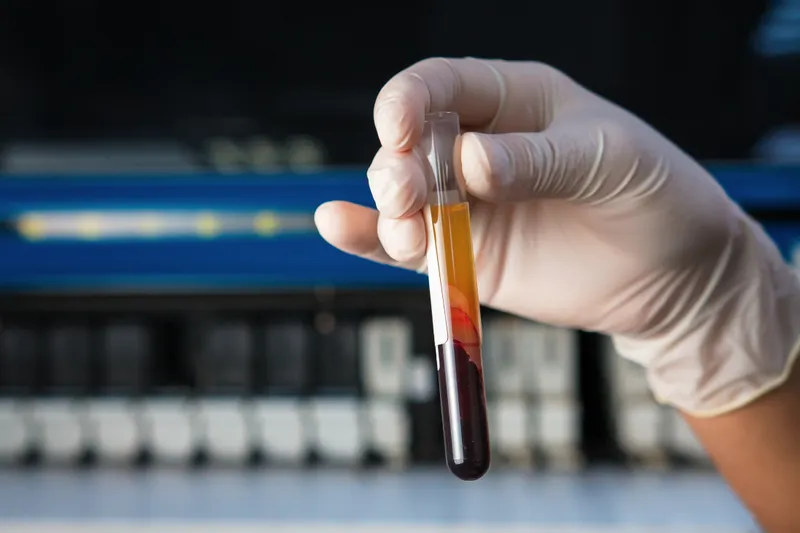
The test requires a standard blood draw. Results return within 2-3 weeks. Our physicians translate complex immunological data into targeted protocol adjustments.
Conditions Treated
Active Cancer Patients Undergoing Treatment
Chemotherapy and radiation suppress immune function at different rates. ImmuneFrame testing quantifies that suppression so SeeBeyond Medicine can support immune resilience with targeted interventions during treatment.
Active Cancer Patients Undergoing Treatment
Chemotherapy and radiation suppress immune function at different rates. ImmuneFrame testing quantifies that suppression so SeeBeyond Medicine can support immune resilience with targeted interventions during treatment.
Cancer Survivors Monitoring Recurrence Risk
Immune surveillance capacity predicts recurrence risk. Our integrative team tracks ImmuneFrame markers over time for cancer survivors, detecting immune suppression before clinical recurrence appears.
Autoimmune and Chronic Infection Patients
Dysregulated immune cell populations drive autoimmune flares and chronic infections. SeeBeyond Medicine uses ImmuneFrame data to identify whether overactive or underactive pathways are responsible, guiding precise intervention.
Patients Recovering from Immunotherapy
Immunotherapy reshapes immune cell populations. We use ImmuneFrame testing to monitor that remodeling and to detect immune-related adverse effects before they escalate.

Benefits
Targeted Immune Support Protocols
Targeted Immune Support Protocols
ImmuneFrame data identifies which specific immune pathways need reinforcement. SeeBeyond Medicine designs IV therapy, peptide, and nutritional protocols matched to your deficiencies. Generic immune-boosting approaches become unnecessary when you have quantified data.
Objective Treatment Response Tracking
Serial ImmuneFrame panels show whether your integrative protocol is shifting immune function in the right direction. Our physicians adjust dosing and timing based on measured cell counts, not estimated timelines.
Informed Immunotherapy and Integrative Decisions
Knowing your NK cell activity, T-cell ratios, and MDSC burden helps SeeBeyond Medicine select the most appropriate complementary therapies. High MDSC counts, for example, may indicate a need for mistletoe or thymosin before other interventions.
What to Expect
Your Journey
01.
1. Oncology Consultation and Immune History Review
Your ImmuneFrame evaluation begins with a review of your cancer history, current treatments, and immune-related symptoms. SeeBeyond Medicine determines which immune markers are most clinically relevant to your situation. That assessment shapes the interpretation framework for your results.
02.
2. Blood Draw at Scarsdale or Greenwich
A standard venous blood draw at our Scarsdale, NY office or Greenwich, CT office provides the sample. The specimen ships to a CLIA-certified immunology laboratory for flow cytometry and cytokine analysis.
03.
3. ImmuneFrame Results Interpretation
SeeBeyond Medicine schedules a dedicated consultation to review your immune profile. Your physician explains each marker — CD4/CD8 ratios, NK cell functional activity, MDSC counts, and Th1/Th2 cytokine balance — and what each finding means for treatment.
04.
4. Personalized Immune Optimization Protocol
Your ImmuneFrame data drives a targeted protocol. This may include high-dose vitamin C, mistletoe therapy, thymosin peptides, or nutritional interventions calibrated to the specific immune gaps your panel revealed.
What Our Patients Say
Patient Experiences with ImmuneFrame Testing
Real stories from patients who found answers.
Patients at SeeBeyond Medicine describe ImmuneFrame testing as a turning point in their cancer care. Quantified immune data replaces guesswork with a clear optimization roadmap. Our physicians use that clarity to adjust protocols in real time.
Frequently Asked Questions
Common Questions
How is ImmuneFrame different from a standard CBC?
A complete blood count measures total white cell numbers without distinguishing subtypes. ImmuneFrame analyzes specific immune cell populations — CD4+, CD8+, NK cells, regulatory T cells, MDSCs — plus their activation states and functional capacity. SeeBeyond Medicine uses both tests together for the most complete immune picture.
How often should I repeat ImmuneFrame testing?
Our integrative team typically recommends retesting every 3-6 months for active cancer patients and every 6-12 months for survivors in remission. Your physician adjusts the schedule based on treatment phase and measured response.
Does insurance cover ImmuneFrame testing?
Coverage varies by plan. SeeBeyond Medicine assists with prior authorization when applicable and provides transparent self-pay pricing for patients whose plans do not include advanced immune profiling.
What immune markers does ImmuneFrame measure?
The panel quantifies T-cell subsets (CD4+ and CD8+), NK cells, B cells, regulatory T cells, myeloid-derived suppressor cells, and cytokine profiles including IL-6, TNF-alpha, and IFN-gamma. Our physicians interpret these markers as a connected system, not isolated numbers.
Related Services
Related Services at SeeBeyond Medicine
- Mistletoe Therapy — Immunomodulatory treatment for cancer support
- High-Dose Vitamin C — IV immune system reinforcement
- Thymosin Peptide Therapy — T-cell maturation and activation support
- Oncotrace Monitoring — Circulating tumor cell tracking
Take the First Step
Know What Your Immune System Is Doing — Not What You Hope It Is Doing
Even if you are already in treatment, even if your oncologist has not ordered immune profiling, ImmuneFrame testing at SeeBeyond Medicine in Scarsdale and Greenwich gives you the quantified immune data that shapes smarter decisions.
Schedule your ImmuneFrame consultation today | Call: 914-722-9440