
Medically reviewed by Dr. Hyun Joon Lee, MD. Board-certified in Family Medicine, Integrative Holistic Medicine, and Obesity Medicine. Founder and Medical Director, SeeBeyond Medicine.
What deep TMS actually does
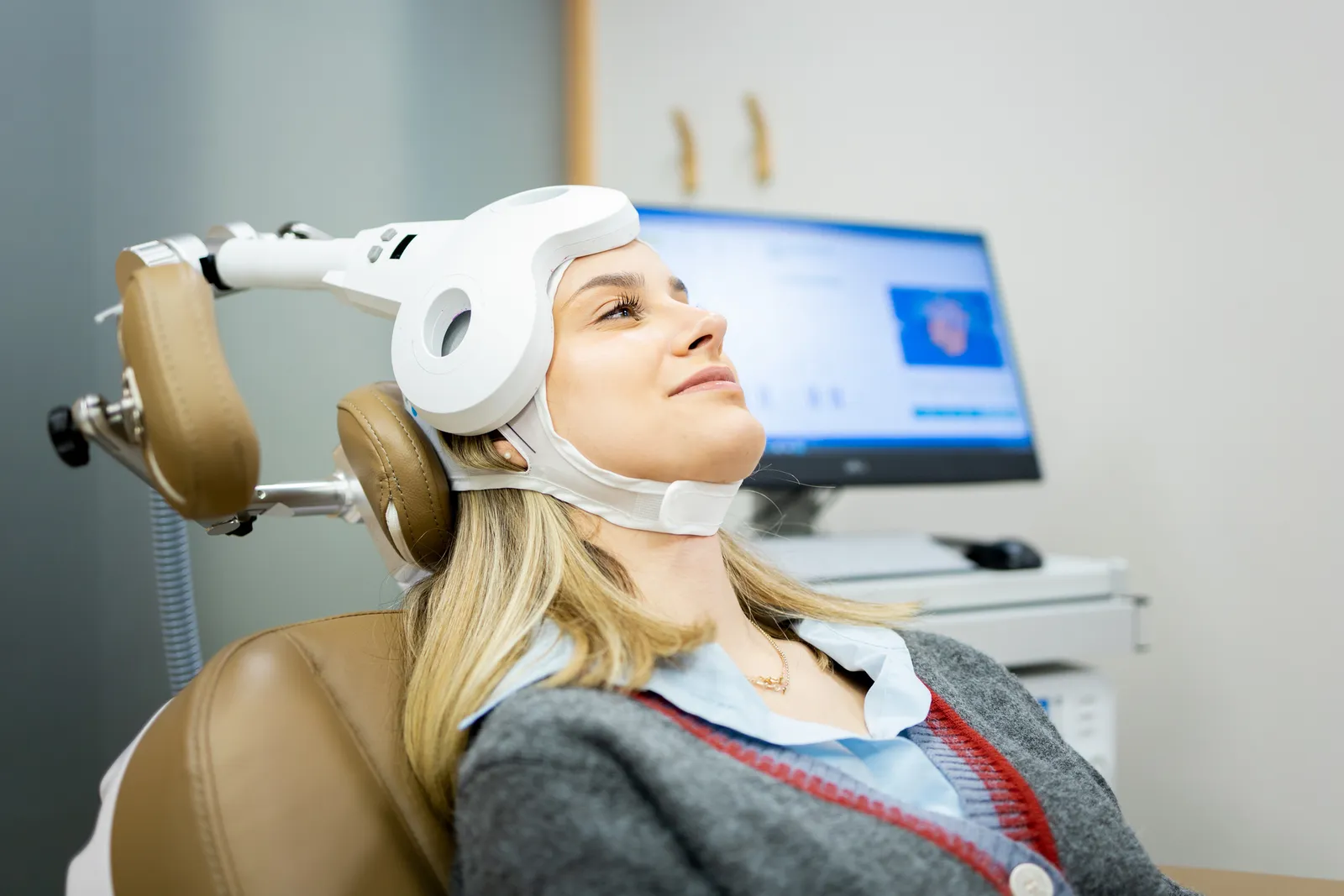
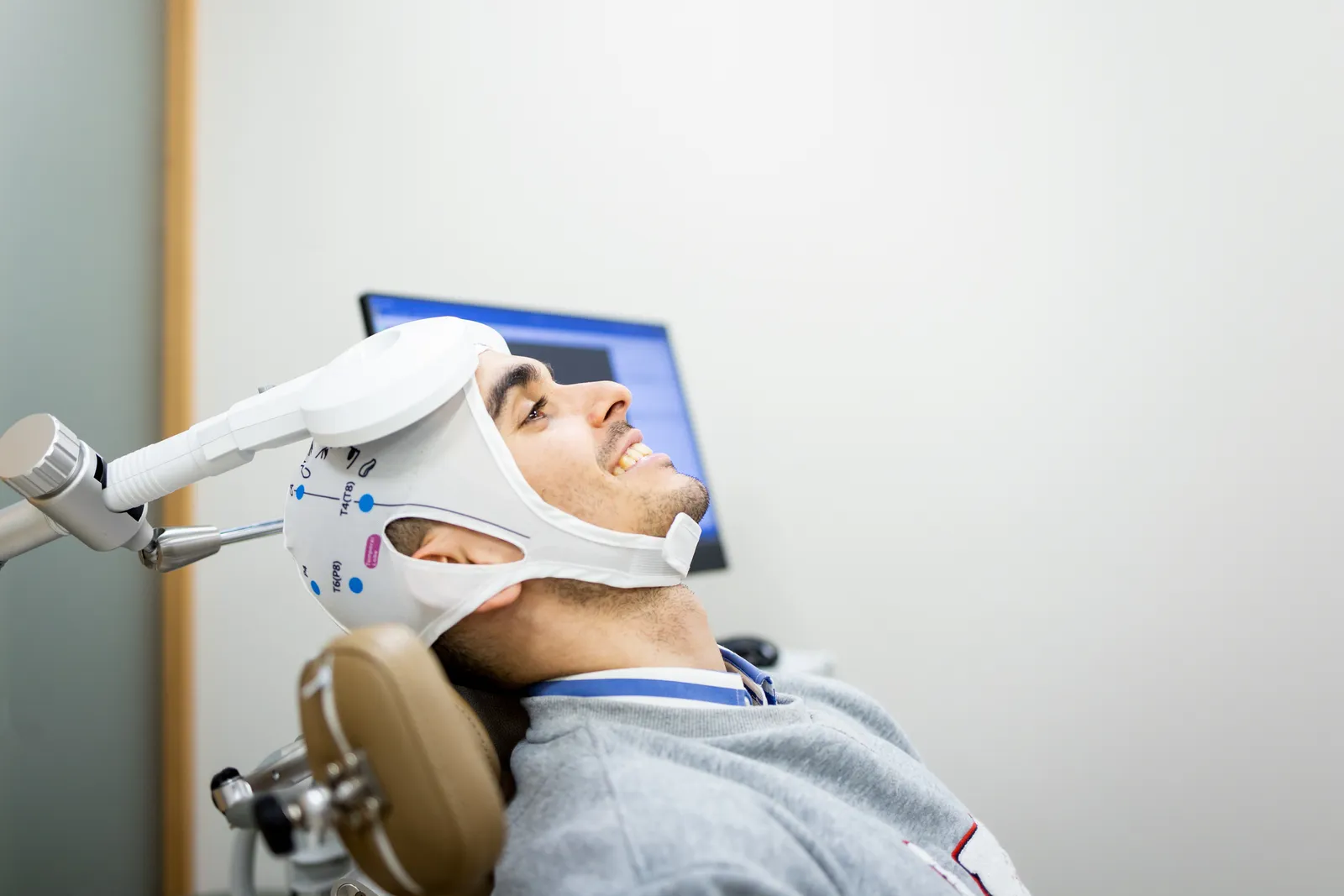
Transcranial magnetic stimulation passes a current through an electromagnetic coil held against the scalp. The coil produces brief magnetic pulses that induce a weak electrical field in the tissue below.
When that field crosses a threshold, neurons in the targeted structure depolarize and fire. Deep TMS uses H-coils, which spread that field wider and deeper than standard figure-eight coils.
That description is close to how the manufacturer described the device to regulators in its 510(k) summary for the Deep TMS System.
The practical consequence matters more than the physics. A coil that reaches deeper structures can be aimed at circuits sitting below the surface cortex, which is why one platform carries separate clearances for depression and for obsessive-compulsive disorder.
Depression treatment usually moves in a fixed order. You start an antidepressant, you wait six to eight weeks, and if the response is partial you switch or augment.
Deep TMS enters the conversation once that sequence has run twice or more without adequate relief. It is a next step rather than a first step.
The sections below work through mechanism, cleared uses versus off-label uses, candidacy, safety, the shape of a course, and the comparison with medication and ketamine.
How the H-coil reaches deeper circuits
Different H-coils exist because different conditions involve different circuits. The coil is not one shape aimed at one spot.
The H1 coil targets the left dorsolateral prefrontal cortex, the region used in the pivotal depression work published in World Psychiatry.
The H7 coil targets the medial prefrontal cortex and the anterior cingulate cortex. The FDA's De Novo decision summary for OCD names those structures directly.
A separate coil geometry, the H4, was used in the smoking cessation program and aimed at the insula and prefrontal cortex.
Coil design is also the cleanest line between deep TMS and conventional repetitive TMS. We cover field depth, coil geometry, and what each system can reach in our breakdown of how deep TMS differs from traditional rTMS.
If you want the clinical framing rather than the engineering, start with deep TMS therapy at SeeBeyond Medicine.
Which uses the FDA has cleared, and which are off-label
This is the part most articles blur. A device clearance is specific, and everything outside it counts as off-label use.
Off-label prescribing is legal and common in psychiatry. It means the manufacturer did not submit a pivotal trial to the FDA for that indication, so the evidence base is smaller and the insurance path is harder.
| Cleared use | Year | FDA record |
|---|---|---|
| Major depressive disorder | 2013 | 510(k) K122288 |
| Obsessive-compulsive disorder, as an adjunct | 2018 | De Novo DEN170078 |
| Depressive episodes with comorbid anxiety symptoms | 2021 | 510(k) K203735 |
The 2021 clearance also covered a theta burst protocol, a shorter stimulation pattern for depression. A separate 2020 clearance covers short-term smoking cessation in adults.
Read the wording on the OCD clearance carefully. It is adjunctive, so patients stay on their existing medication or psychotherapy at current doses during the course.
Anxiety that travels with depression sits inside the depression clearance rather than standing alone. We explain that boundary on our page for deep TMS for anxiety and mood disorders.
For obsessive-compulsive disorder, the cleared protocol includes brief individualized symptom provocation immediately before each session. That detail is covered on our page for deep TMS for OCD.
Post-traumatic stress disorder and chronic insomnia sit outside the cleared indications. Clinicians do treat both with TMS, and the honest framing is that the research is earlier and the coverage picture differs.
If you are researching either, read our pages on deep TMS for PTSD and deep TMS for insomnia with that caveat in mind, then ask which indication your case actually falls under.
SeeBeyond Medicine runs a deep TMS program that treats more than 30 conditions with a 91% response rate across the program. Ask how that figure was measured and where your diagnosis sits inside it, because a program-wide number is not a personal forecast.
What the trial evidence shows
Two randomized sham-controlled trials carry most of the weight behind the depression and OCD clearances.
The depression trial was a multicenter, double-blind study in adults who had not responded adequately to one to four antidepressant trials in the current episode, or who could not tolerate two. Active deep TMS outperformed sham stimulation.
The full report sits in World Psychiatry, 2015. The protocol there ran twenty daily weekday sessions across four weeks, then continued at a reduced frequency.
The OCD trial ran across eleven centers in patients whose symptoms persisted despite treatment. Response, defined as a meaningful drop on the Yale-Brown Obsessive Compulsive Scale, reached 38.1% with active stimulation against 11.1% with sham.
That result appears in the American Journal of Psychiatry, 2019. Several authors disclosed financial ties to the device manufacturer, which is standard for pivotal device trials and worth knowing as you read the numbers.
Both trials share a limitation. They enrolled patients who had already failed treatment, so the results describe a difficult population rather than a first-line one.
Response is also not remission. A responder has improved measurably, yet some responders still carry symptoms and some need maintenance sessions later.
Who is a candidate
Candidacy turns on three things: your diagnosis, your medication history, and a safety screen.
Diagnosis matters because the cleared protocols are diagnosis-specific. A course aimed at depression uses a different coil, target, and stimulation pattern than a course aimed at OCD.
Medication history matters because the trials and most insurers frame deep TMS as treatment for people who did not get adequate relief from antidepressants. The number of prior trials required varies by plan.
Age limits are written into the FDA records themselves. The OCD decision summary states that safety and effectiveness were not established in patients younger than 22 or older than 68.
The safety screen is the third gate, and it is the one people underestimate. It comes next.
Insurance is a fourth practical filter in this region, and criteria differ between New York and Connecticut plans. We break down documentation, prior authorization, and typical failed-trial requirements in TMS insurance coverage in New York and Connecticut.
Safety, side effects, and who should not have deep TMS
The most common side effects are local and short-lived. Scalp discomfort at the stimulation site and headache lead the list, and both tend to fade during the first week.
Deep TMS requires no sedation, and patients drive themselves home. It avoids the systemic effects oral antidepressants produce, because nothing enters the bloodstream.
Seizure is the serious risk, and it is rare. A literature review indexed in PubMed Central puts the observed rate across large session counts at a small fraction of one percent.
Risk is not evenly distributed. It concentrates in people with a seizure history, structural brain lesions, sleep deprivation, heavy alcohol use, or medications that lower the seizure threshold.
Implanted metal is the other screening priority. Conductive or ferromagnetic material in the head or above the shoulders is a contraindication, since the field can heat metal or disturb an implanted electronic device.
Dental fillings and orthodontic braces are generally acceptable. Cochlear implants, aneurysm clips, stents in the head, and implanted stimulators are not.
The National Institute of Mental Health overview of brain stimulation therapies is a useful neutral reference to read before your screening visit.
Bring your full medication list to that visit, including supplements and anything prescribed elsewhere. Screening is only as good as the history it is given.
What a treatment course looks like
A course is a schedule, not a single appointment. That schedule is the main practical question patients raise.
In the published depression protocol, sessions ran daily on weekdays for roughly four weeks, followed by a tapered maintenance phase. Stimulation itself took about twenty minutes inside a longer visit.
Theta burst protocols cleared in 2021 compress the stimulation into a much shorter window. Which pattern fits you is a clinical decision rather than a preference.
The first session takes longer than the rest. Motor threshold determination, coil positioning, and mapping happen once, then the daily sessions become routine.
We walk through the first visit, the sensation during stimulation, the weekly rhythm, and when people typically notice change in what to expect from deep TMS treatment.
Location practicalities matter when treatment is daily. Patients in Westchester County generally treat at our Scarsdale, NY office, and patients in Fairfield County generally treat at our Greenwich, CT office.
How deep TMS compares with medication and with ketamine
Antidepressants act on the whole body. That is why weight change, sexual side effects, and sedation show up so often, and why some people stop before a drug has had a fair trial.
Deep TMS is focal. The field is aimed at a target, so the side effect profile stays local and there is no taper when the course ends.
The trade is time. Medication is a daily tablet, while deep TMS is a daily visit for several weeks.
Ketamine and esketamine occupy different ground again. Esketamine was approved as a nasal spray for treatment-resistant depression under a restricted program, and the FDA label for NDA 211243 requires administration in a certified setting with monitoring after each dose.
That monitoring requirement exists because of sedation and dissociation risk. Patients cannot drive themselves home afterward, which is the opposite of the deep TMS arrangement.
Speed is the usual argument for ketamine and the usual argument against deep TMS. Effects from deep TMS typically build across weeks rather than days.
Neither is a default. If you are weighing the two, our page on ketamine therapy sets out the monitoring, scheduling, and candidacy differences side by side.
A thorough workup can also change the ranking. Thyroid dysfunction, low ferritin, sleep apnea, and B12 deficiency all produce depressive symptoms, and testing for them before committing to a six-week protocol is a reasonable use of your time.
Key Takeaways
- Deep TMS uses a magnetic field to stimulate brain regions involved in mood regulation, and it does not require anesthesia or sedation.
- It is generally considered after antidepressant trials have not produced adequate relief, not as a first step.
- A standard course runs daily on weekdays over several weeks, with each session lasting roughly twenty minutes.
- The FDA has cleared deep TMS for specific indications; other uses are considered off-label and should be discussed with a physician.
- Candidacy depends on your diagnosis, medication history, and safety screening for implanted metal or seizure risk.
Related Resources
Continue in this series
- What to expect from deep TMS treatment covers the first visit, the sensation during stimulation, and the weekly rhythm of a course.
- Deep TMS versus rTMS compares coil geometry, field depth, and what each system is cleared to treat.
- TMS insurance coverage in NY and CT covers prior authorization, failed-trial documentation, and how plans differ across the two states.
Related services
- Deep TMS therapy at SeeBeyond Medicine for the clinical overview and screening process.
- Deep TMS for anxiety and mood disorders for depression carrying comorbid anxiety symptoms.
- Deep TMS for OCD for the adjunctive protocol and the symptom provocation step.
- Ketamine therapy for the comparison covered above.
Reading about deep TMS is useful. Deciding whether you are a candidate takes a history, a medication review, and a safety screen that no article can perform.
If depression, anxious depression, or OCD has not responded to the treatments you have already tried, you can schedule a consultation to review your case with a board-certified physician at our Scarsdale, NY or Greenwich, CT office. Bring your medication history and any recent labs.
Testing before treatment is the point. Test, don't guess.
This article is for general education and does not replace a medical evaluation. Treatment decisions depend on your history, medications, and lab work. Speak with a qualified clinician before starting, stopping, or changing any therapy.