
What Is Menopause Hormone Therapy?
Menopause hormone therapy is a prescription treatment that replaces estrogen as the ovaries wind down. Women with a uterus also take a progestogen, because estrogen alone raises endometrial cancer risk. It treats hot flashes, night sweats and vaginal dryness, and prevents bone loss.
A boxed warning sits at the top of a prescription label, so its removal reads like a major reversal. The details are more measured than the headlines. They matter before you talk with a clinician about your own care.
Below, you will find what the FDA changed, why the warning existed, how timing and the form of therapy affect risk, who should avoid systemic hormones, and how SeeBeyond Medicine works through the decision with you.
What the FDA Changed, and When
The November 2025 announcement started a relabelling process. The FDA asked the makers of all estrogen and progestogen menopause products to update their labels.
On February 12, 2026, the FDA approved updated labeling for the first six products: Prometrium, Divigel, Cenestin, Enjuvia, Estring and Bijuva. By then, 29 companies had submitted proposed changes.
Six approvals against 29 submissions means the process is still under way, and some labels have not been updated yet. An older boxed warning on your prescription insert reflects that timing.
What Did Not Change in the Hormone Therapy Label
The risk information did not disappear. For systemic products, the FDA kept the cardiovascular and breast cancer information in the body of the label, outside the boxed warning.
One boxed warning stays. The FDA is not seeking to remove the warning about endometrial cancer for systemic estrogen-alone products.
That warning exists for a clear reason. In women with a uterus, estrogen alone raises the risk of endometrial cancer. Adding a progestogen reduces the risk of endometrial hyperplasia, a thickening of the uterine lining that can lead to cancer.
The conditions in which estrogen should not be used also remain on the label. They are listed in plain terms further down.
Why the Warning Existed: The Women's Health Initiative
The boxed warnings trace back to the Women's Health Initiative (WHI), a study of hormone therapy in women past menopause. In explaining its decision, the FDA pointed to who was studied.
According to the FDA, the average WHI participant was 63, more than a decade past the average age of menopause. Participants also took a hormone formulation that is no longer in common use.
That detail matters. Results from women who started hormones in their 60s do not automatically apply to a 51-year-old with new hot flashes, which is why timing now features in the updated label.
Timing Matters: Under 60 or Within 10 Years of Menopause
The updated FDA labeling recommends starting systemic hormone therapy within 10 years of menopause onset or before age 60.
The Menopause Society's 2022 position statement reaches a similar view. For women under 60 or within 10 years of menopause with no contraindications, it finds the benefit-risk ratio favorable for bothersome hot flashes and for preventing bone loss.
For women who start later or after 60, the statement finds the balance less favorable. The absolute risks of heart disease, stroke, blood clots and dementia are greater in that group.
The same statement calls hormone therapy the most effective treatment for hot flashes, night sweats and genitourinary syndrome of menopause. It also prevents bone loss and fracture.
Your own history matters more than any headline here. A 49-year-old in perimenopause and a 66-year-old whose periods stopped long ago face very different decisions.
Perimenopause vs Menopause: Know Which Stage You Are In
Menopause is reached after 12 months in a row without a period, according to the HHS Office on Women's Health. The average age in the US is 52, usually between 45 and 58.
Perimenopause is the transition before that point. It usually starts in the mid to late 40s and lasts about 4 years on average, though it can run from 2 to 8 years.
Common perimenopause symptoms
- Irregular periods
- Hot flashes
- Sleep problems
- Mood changes
- Vaginal dryness
- Lower interest in sex
SeeBeyond Medicine works by a simple rule: "Test, don't guess!" Before recommending treatment, the practice may use a comprehensive blood panel or DUTCH hormone testing, so the plan addresses the cause rather than the symptom.
Your Options: Patches, Gels, Pills and Vaginal Estrogen
Hormone therapy is not one product. Systemic therapy treats whole-body symptoms such as hot flashes, while low-dose vaginal estrogen acts locally on vaginal and urinary symptoms.
For genitourinary symptoms in women who do not need systemic therapy, the Menopause Society recommends low-dose vaginal estrogen or other vaginal options. It also notes that transdermal routes and lower doses may lower the risk of blood clots and stroke.
Transdermal means through the skin, as with a patch or gel. Pills are taken by mouth. Because the route can change clot and stroke risk, the form of therapy is part of the decision.
If you have a uterus, a progestogen is added to systemic estrogen to protect the uterine lining. Progesterone is one option your clinician may discuss with you.
A practical note on supply: on September 3, 2026, the FDA said patients had trouble finding estradiol patches because demand rose after the November 2025 label change. The agency added that supply has nearly doubled over the past year and all six manufacturers are expanding production.
Bioidentical Hormones, Explained Honestly
Bioidentical hormones have the same structure as the hormones a woman's body makes. The FDA has approved hormone drugs that are identical to a woman's own hormones, so a product can be both bioidentical and FDA-approved.
Many products marketed as bioidentical are compounded instead, prepared by a pharmacy rather than approved by the FDA. The FDA has no evidence that compounded products are safer or more effective.
A 2020 National Academies report found insufficient evidence on the safety and effectiveness of compounded bioidentical hormone therapy. It recommended that prescribers restrict its use to specific medical circumstances.
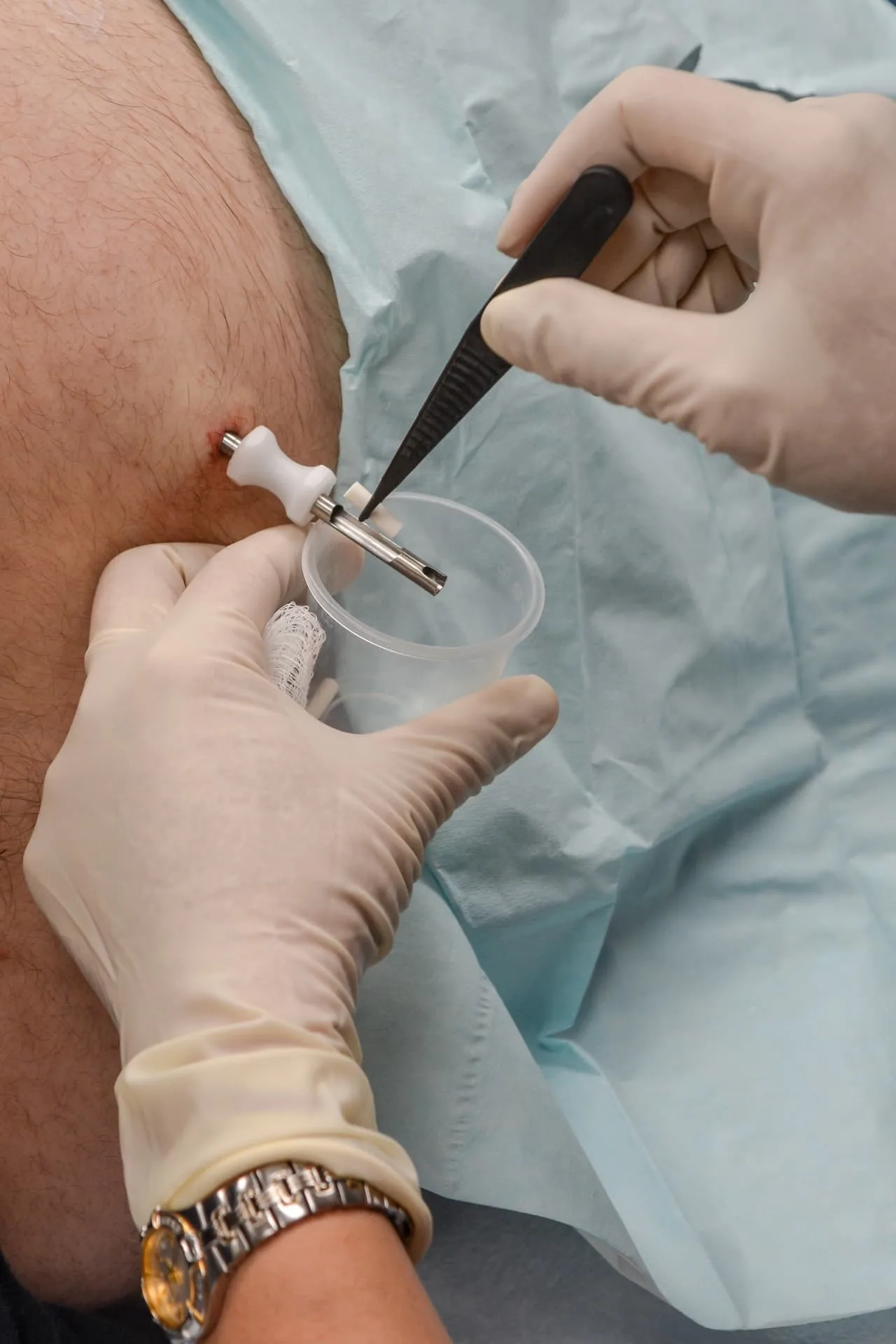
Hormone pellets are compounded, so that recommendation applies to them. SeeBeyond Medicine offers pellet therapy as one option, discussed alongside FDA-approved products and chosen case by case.
The practice does not present pellets as safer, more natural or more effective than FDA-approved options. Your clinician reviews the trade-offs of each route with you.
Who Should Not Take Systemic Hormone Therapy
According to the prescribing information, estrogen therapy should not be used if you have:
- Unexplained genital bleeding
- Current or past breast cancer
- An estrogen-dependent tumor
- Active or past blood clots in the legs or lungs
- Active or past stroke or heart attack
- Liver disease
- A known clotting disorder
If any item on this list applies to you, raise it before any hormone discussion goes further. Each one changes what is reasonable for you.
Questions about doses belong with your prescribing clinician. The right answer depends on your symptoms, history and response over time.
How SeeBeyond Medicine Approaches Hormone Therapy
There is no generic one size fits all approach to menopause care. SeeBeyond Medicine's hormone replacement therapy visits follow five steps:
- Listen first. You describe your symptoms, sleep, mood and what matters most to you.
- Review your history and labs. Your medical and family history, medications and results shape what is reasonable.
- Discuss options and risks. Systemic and vaginal options, delivery routes, and FDA-approved and compounded products are compared openly.
- Build a personalized plan. Treatment, if you choose it, fits your timing, risk profile and preferences.
- Follow up. Your clinician reviews how you feel and whether the plan still fits.
Care is directed by a physician who is board-certified in Family Medicine, Integrative Holistic Medicine, and Obesity Medicine. The practice has treated more than 20,000 patients since it opened in 2006.
You can be seen at our Scarsdale, NY office in Westchester County, at our Greenwich, CT office in Fairfield County, or by telemedicine. Hormone care is part of the practice's broader women's health care.
Key Takeaways
- The FDA is removing the boxed warning about heart disease, breast cancer and dementia from menopause hormone therapy labels; the first six products were relabelled in February 2026 and more are in progress.
- The risk information has not disappeared. It moved into the body of the label, and the endometrial cancer warning for estrogen alone in women with a uterus stays.
- Timing matters: the benefit-risk balance is most favorable for women under 60 or within 10 years of menopause.
- Patches and gels, vaginal estrogen, and pills carry different risk profiles, so the form of therapy is part of the decision.
- Hormone therapy is a personal decision that depends on your symptoms, history and labs, made with a physician who reviews it with you over time.
Related Hormone and Testing Resources
- Hormone therapy for men: read our article on testosterone pellet therapy.
- Lab work beyond the basics: see what a standard annual physical misses.
Talk Through Hormone Therapy With a Physician
The label change is a good reason to ask questions. It is not a reason to start or stop anything on your own.
If hot flashes, broken sleep or mood changes are wearing you down, see beyond your symptoms with a physician who reviews your history and labs. Schedule a Free Consultation with SeeBeyond Medicine in Scarsdale, Greenwich or by telemedicine to discuss hormone replacement therapy for menopause.
This article is for general education and does not replace a medical evaluation. Treatment decisions depend on your history, medications, and lab work. Speak with a qualified clinician before starting, stopping, or changing any therapy.