
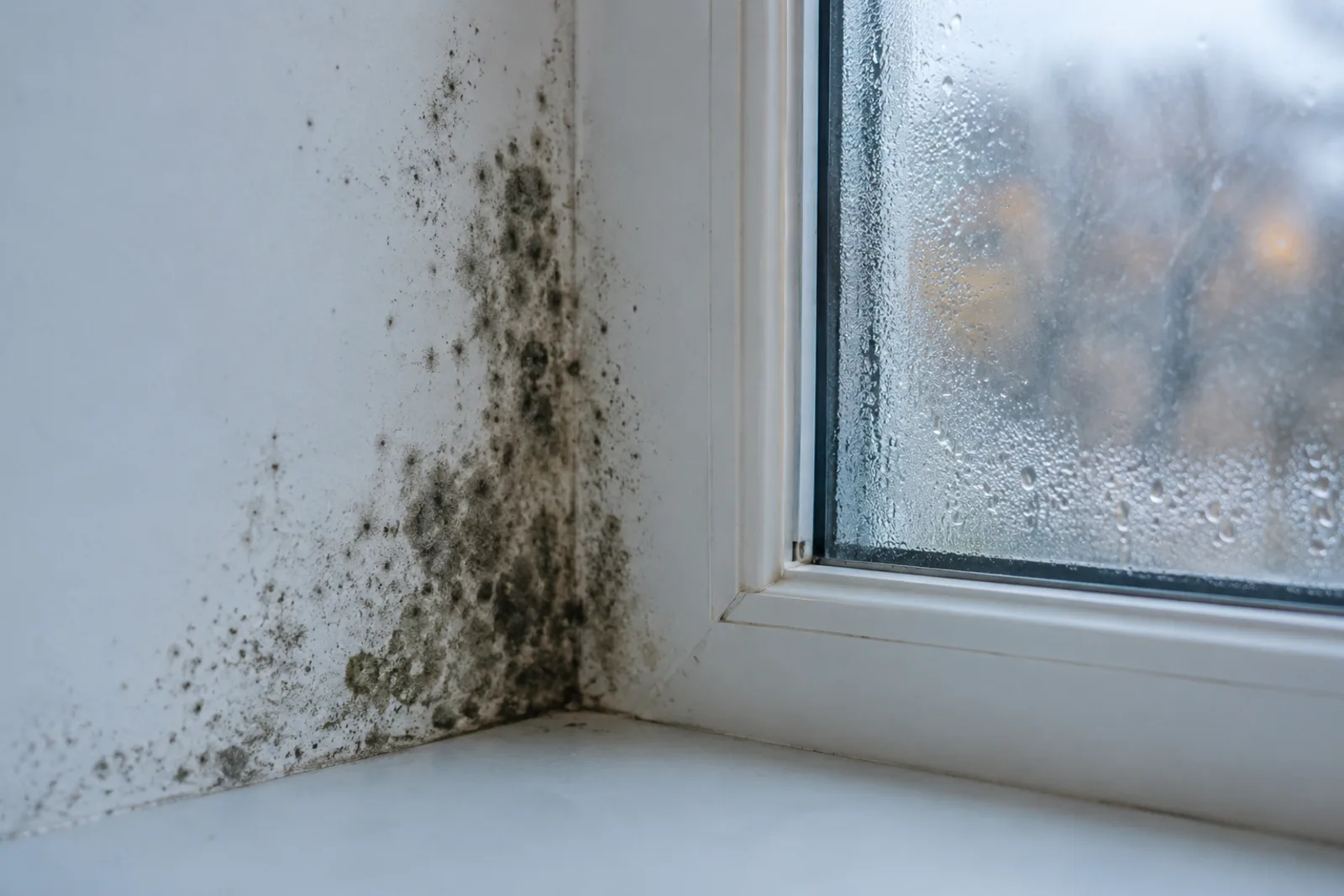
What Is Indoor Mold, and What Are Mycotoxins?
Indoor mold is fungal growth on damp materials such as drywall, wood, carpet and ceiling tiles. Moisture is the driver: without a water source, mold cannot take hold. Mycotoxins are toxic compounds that certain molds produce naturally, and low levels also occur in many foods.
The EPA puts it simply: the key to mold control is moisture control. It advises cleaning up mold promptly, fixing the water problem, and drying water-damaged areas within 24 to 48 hours.
Below, you will find what research links to damp homes, which symptoms overlap with other conditions, where the science is debated, and how SeeBeyond Medicine investigates a suspected exposure.
What the Evidence Clearly Links to Damp, Moldy Homes
The strongest evidence concerns breathing. A 2004 Institute of Medicine report, summarized by the CDC, found sufficient evidence linking indoor mold to upper respiratory symptoms, cough and wheeze in otherwise healthy people.
The same report linked mold to asthma symptoms in people with asthma, and to hypersensitivity pneumonitis in susceptible people. Hypersensitivity pneumonitis is an immune reaction in the lungs to inhaled particles.
The CDC adds that, for some people, mold can cause a stuffy nose, sore throat, coughing or wheezing, burning eyes, or skin rash. People who are immunocompromised or have chronic lung disease may develop lung infections from mold.
The World Health Organization's 2009 guidelines on dampness and mould reached a similar conclusion. People in damp or mouldy buildings have a higher risk of respiratory symptoms, respiratory infections and asthma flares, and fixing the dampness can reduce those problems.
Mold Exposure Symptoms That Overlap With Other Conditions
Many people who suspect mold describe something broader: fatigue, brain fog, headaches, and sinus trouble that never fully resolves. These symptoms are real, and they deserve attention.
The difficulty is that they are non-specific. Fatigue and poor concentration can come from thyroid problems, anemia, poor sleep, depression and other causes, so on their own they cannot point to mold.
Sinus congestion and cough sit close to the proven list above. Fatigue and brain fog sit further away, and that is where the debate begins.
Where the Science Is Still Debated: Mold Illness and CIRS
The 2004 National Academies review found very few studies on links between mold or dampness and fatigue, neuropsychiatric disorders or other health problems. It judged the evidence for those links insufficient.
Insufficient evidence is not proof of no effect. It means the question had not been studied well enough to answer.
Chronic inflammatory response syndrome (CIRS) is a label some clinicians use for multi-system symptoms they connect to water-damaged buildings. UCLA Health notes that CIRS is not widely seen as an established medical diagnosis.
The same source says people with these symptoms deserve a broader workup. Both points hold at once: your symptoms can be real and worth investigating while the label used to explain them stays contested.
Start With the House: Moisture, Humidity and Cleanup
No treatment works well while the exposure continues, so the first step is environmental. The EPA recommends keeping indoor relative humidity below 60 percent, ideally between 30 and 50 percent.
Practical steps for mold in the house
- Fix leaks and water problems, then clean up the mold.
- Dry water-damaged areas and items within 24 to 48 hours.
- Check basements and crawl spaces, especially humid ones with bare earth floors.
- Watch for condensation on cold windows and walls once the heat comes on.
Cleanup size matters. Under the EPA's cleanup guidance, a homeowner can usually handle a moldy area smaller than about 10 square feet, roughly a 3 ft by 3 ft patch.
Larger areas, extensive water damage, or sewage and contaminated water call for an experienced professional. Do not run an HVAC system you suspect is contaminated, and if you have health concerns, talk to a health professional before you start cleaning.
What Mycotoxin Testing Can and Cannot Tell You
Some clinicians, including the team at SeeBeyond Medicine, use urine mycotoxin testing as one tool in an exposure workup. You should know its limits before you order one.
In 2015, the CDC cautioned that there is no FDA-approved test for mycotoxins in human urine. Mycotoxin levels that predict disease have not been established.
Because low levels of mycotoxins occur in many foods, they show up in the urine of healthy people too. The CDC also warned that unvalidated tests can lead to incorrect diagnoses and potentially harmful interventions.
A positive result, on its own, does not prove that your home made you sick. A nasal fungal culture is another tool some clinicians use, and its results need the same cautious reading.
At SeeBeyond Medicine, any test result is read alongside your exposure history, your symptoms and a broader workup. "Test, don't guess!" means testing with a purpose, then interpreting with care.
Ruling Out Other Causes of Fatigue and Brain Fog
Persistent fatigue has many possible sources. The American Academy of Family Physicians lists hypothyroidism, anemia, obstructive sleep apnea and depression among secondary causes, with tests such as TSH and a complete blood count guided by your history.
UCLA Health's suggested workup for suspected CIRS is broader still. It includes endocrine problems, vitamin deficiencies, sleep disorders, autoimmune disease, Lyme disease, asthma and neurologic causes.
A comprehensive blood panel can check several of these at once. If food reactions are part of your picture, our beginner's guide to a low-histamine diet covers that question.
How SeeBeyond Medicine Approaches Suspected Mold Exposure
There is no generic one size fits all approach to a suspected mold problem. SeeBeyond Medicine works through it in order:
- Listen first. You describe your symptoms, when they started, and when they ease or worsen.
- Take an exposure history. Your clinician asks about your home, workplace, past water damage and musty smells.
- Test with a purpose. Targeted tests are chosen for your situation and read alongside the rest of your workup.
- Remove the exposure first. Fixing moisture and mold at home comes before anything else.
- Provide physician-guided support. Your plan is personalized and reviewed at follow-up visits.
Supportive options at the practice include far infrared sauna sessions. The sauna is offered as a supportive option and is not presented as a way to remove mycotoxins or treat mold illness.
Care is directed by a physician board-certified in Family Medicine, Integrative Holistic Medicine, and Obesity Medicine. SeeBeyond Medicine has treated more than 20,000 patients since it opened in 2006.
You can be seen at our Scarsdale, NY office in Westchester County, at our Greenwich, CT office in Fairfield County, or by telemedicine.
When to Seek Care Promptly
Some symptoms should not wait for a test result or a home inspection. Most people breathe in Aspergillus spores every day without getting sick, according to the CDC, but people with weakened immune systems or lung disease are at highest risk.
Red flags that need prompt medical care
- Trouble breathing
- An asthma attack that is getting worse
- Fever, chest pain or coughing up blood if you have a weakened immune system or lung disease
Key Takeaways
- Damp, moldy homes are clearly linked to respiratory symptoms, asthma flares and, in susceptible people, hypersensitivity pneumonitis.
- Fatigue, brain fog and other whole-body symptoms are commonly reported, but the evidence linking them to mold is still limited and debated.
- Fixing moisture and removing the mold comes first; no treatment works well while the exposure continues.
- Urine mycotoxin tests are not FDA-approved and find mycotoxins in healthy people too, so results only mean something alongside your history and a broader workup.
- Persistent symptoms deserve a full evaluation that also looks for thyroid problems, anemia, sleep apnea and other common causes.
Related Testing and Integrative Care Resources
- How the practice works: explore integrative medicine at SeeBeyond Medicine.
- Lab work beyond the basics: see what a standard annual physical misses.
Find Out What Is Behind Your Symptoms
If you feel worse at home and better away, that pattern is worth investigating carefully. A physician-led workup can look at your house, your history and other causes together.
See beyond your symptoms. Schedule a Free Consultation with SeeBeyond Medicine in Scarsdale, Greenwich or by telemedicine to talk through suspected mold exposure and mycotoxin testing.
This article is for general education and does not replace a medical evaluation. Treatment decisions depend on your history, medications, and lab work. Speak with a qualified clinician before starting, stopping, or changing any therapy.