TMS Post-Concussion Care in Scarsdale, NY and Greenwich, CT
Post-concussion symptoms persist when injured brain circuits fail to restore normal connectivity. SeeBeyond Medicine's deep TMS post-concussion protocol in Westchester and Fairfield County stimulates the affected neural networks to accelerate recovery from persistent headaches, cognitive fog, and emotional dysregulation.
Schedule your post-concussion TMS consultation at SeeBeyond Medicine today.
Credentials
Brain Injury Recovery at SeeBeyond Medicine
SeeBeyond Medicine's deep TMS program treats 30+ neurological conditions with a 91% response rate. Dr. Hyun Joon Lee applies H-coil protocols specifically targeting post-concussive circuit disruption based on symptom mapping and clinical evaluation.
Treatment is available at our Scarsdale, NY office and Greenwich, CT office.
About This Service
What Is TMS for Post-Concussion Syndrome?
Deep TMS for post-concussion syndrome applies H-coil magnetic stimulation to brain regions affected by traumatic brain injury — primarily the dorsolateral prefrontal cortex and anterior cingulate cortex — to restore disrupted neural connectivity, normalize neurotransmitter signaling, and reduce the neuroinflammation that sustains persistent post-concussive symptoms beyond the expected recovery window.
SeeBeyond Medicine uses TMS for patients whose post-concussion symptoms persist beyond 3 months despite conventional rehabilitation.
Why Concussion Is a Circuit Disorder, Not Just a Chemical Imbalance
A concussion physically disrupts the brain's intricate electrical communication networks. Key regions — including the Central Executive Network (CEN), responsible for focus and problem-solving — can become underactive, producing the hallmark symptoms of brain fog and poor concentration. The Default Mode Network (DMN) can become hyperactive, driving anxiety and rumination. The Salience Network (SN), your brain's emotional switchboard, loses calibration, resulting in mood instability and heightened reactivity.
Because these are circuit-level disruptions, pharmacological solutions that alter brain chemistry often provide limited relief. TMS addresses the electrical dysfunction directly, stimulating the specific networks the injury destabilized.
How TMS Promotes Neuroplasticity and Cortical Reactivation
TMS delivers focused magnetic pulses — comparable in strength to MRI fields — to targeted cortical regions. Each pulse induces a localized electrical current that encourages underactive neurons to fire and re-establish their connections. Repeated sessions leverage long-term potentiation: neural pathways that are repeatedly activated grow stronger and more efficient. Over a standard course of 20–36 sessions, this stimulation gradually restores underactive circuits, reduces hyperactive ones, and promotes upregulation of Brain-Derived Neurotrophic Factor (BDNF) — a protein essential for neural repair and lasting plasticity.
The SeeBeyond Enhanced Protocol
Standard TMS clinics stimulate the brain in isolation. SeeBeyond Medicine optimizes the biological environment around the brain so TMS can work more effectively and produce lasting change. Dr. Hyun Joon Lee leads an integrative four-component protocol at our Scarsdale, NY office and Greenwich, CT office:
- Neurotransmitter Testing (pre- and post-treatment): Baseline measurement of serotonin, dopamine, and norepinephrine tracks brain chemistry rebalancing as symptoms resolve, providing objective evidence of recovery.
- Calm IV Therapy: Magnesium and B-vitamin infusions bypass the digestive system for full absorption, calming the nervous system and supplying nutrients required for active neural repair.
- Acupuncture Integration: Combination therapy reduces inflammatory markers — a key driver of persistent post-concussion symptoms — and elevates BDNF, reinforcing the plasticity gains produced by TMS.
- Health Coach Brain Health Sessions: Evidence-based guidance on anti-inflammatory nutrition, sleep hygiene, stress management, and supplementation sustains recovery between sessions and after treatment concludes.
What to Expect During Treatment
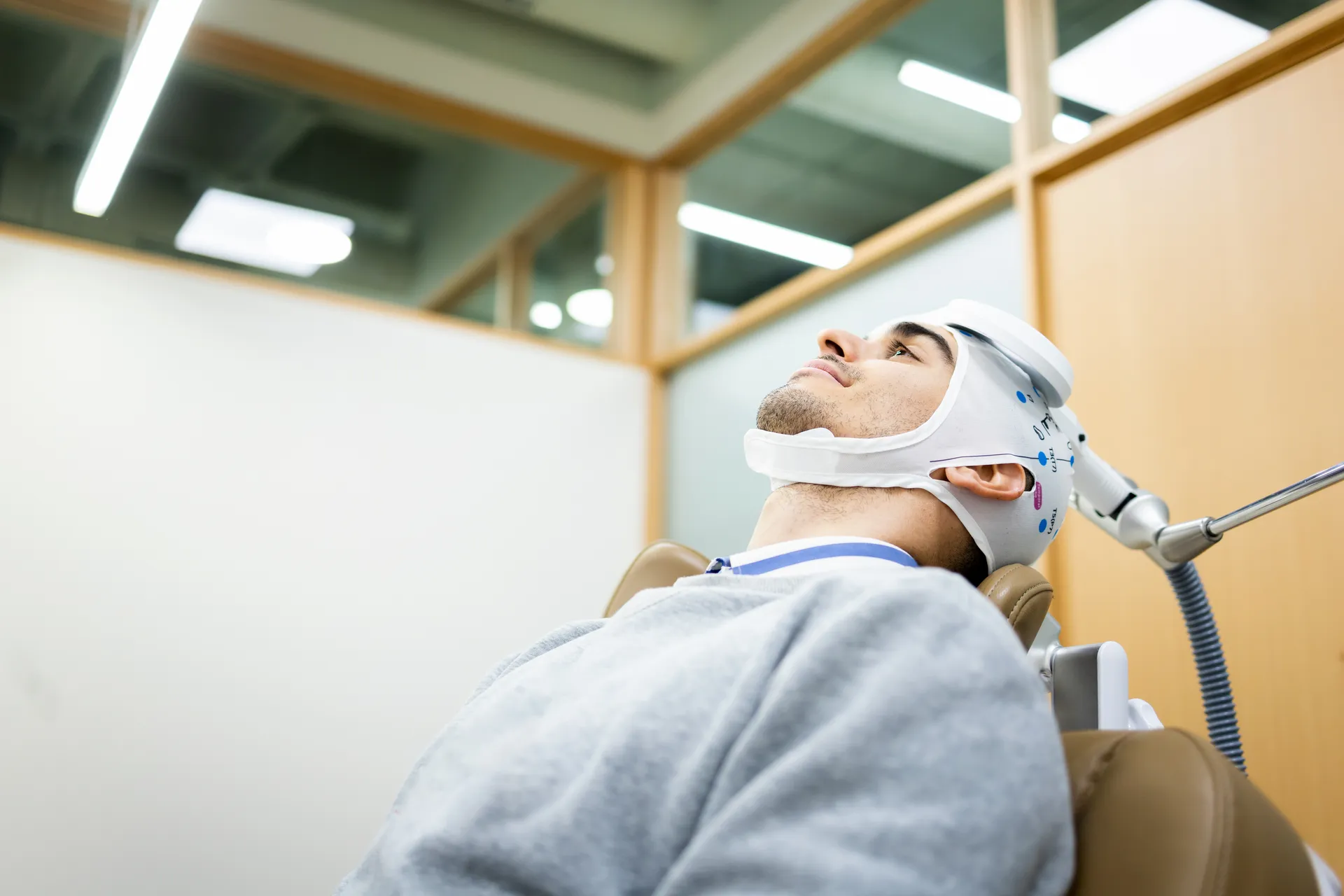
Each session runs 5–20 minutes depending on the protocol selected. You remain fully awake in a comfortable chair — no anesthesia or sedation is required. A soft clicking sound accompanies each pulse, and you may feel a gentle tapping on your scalp. There is no recovery time; most patients return to normal activities immediately after each visit.
Who Is a Candidate for Post-Concussion TMS?
SeeBeyond Medicine's enhanced protocol is appropriate if you:
- Sustained a concussion or mild TBI months or years ago
- Continue to experience brain fog, fatigue, memory difficulty, headaches, or mood changes
- Have seen limited results from rest, medication, or standard rehabilitation
- Are seeking a non-pharmacological, non-invasive approach targeting root-cause circuit dysfunction
- Are ready for a physician-led, comprehensive recovery program
While TMS is FDA-approved for depression, its application to Post-Concussion Syndrome is an advanced off-label protocol supported by research from leading institutions including Stanford and Harvard.
Conditions Treated
Post-Concussion Symptoms Treated with TMS
SeeBeyond Medicine applies deep TMS to persistent post-concussion headaches, cognitive impairment (brain fog, memory difficulty, processing speed reduction), emotional lability, sleep disruption, light and noise sensitivity, and fatigue.
Athletes, accident survivors, and veterans with unresolved concussion symptoms benefit from TMS at SeeBeyond Medicine when standard post-concussion rehabilitation plateaus.

Benefits
Neural Network Restoration
What to Expect
Your Journey
01.
1. Concussion History Review
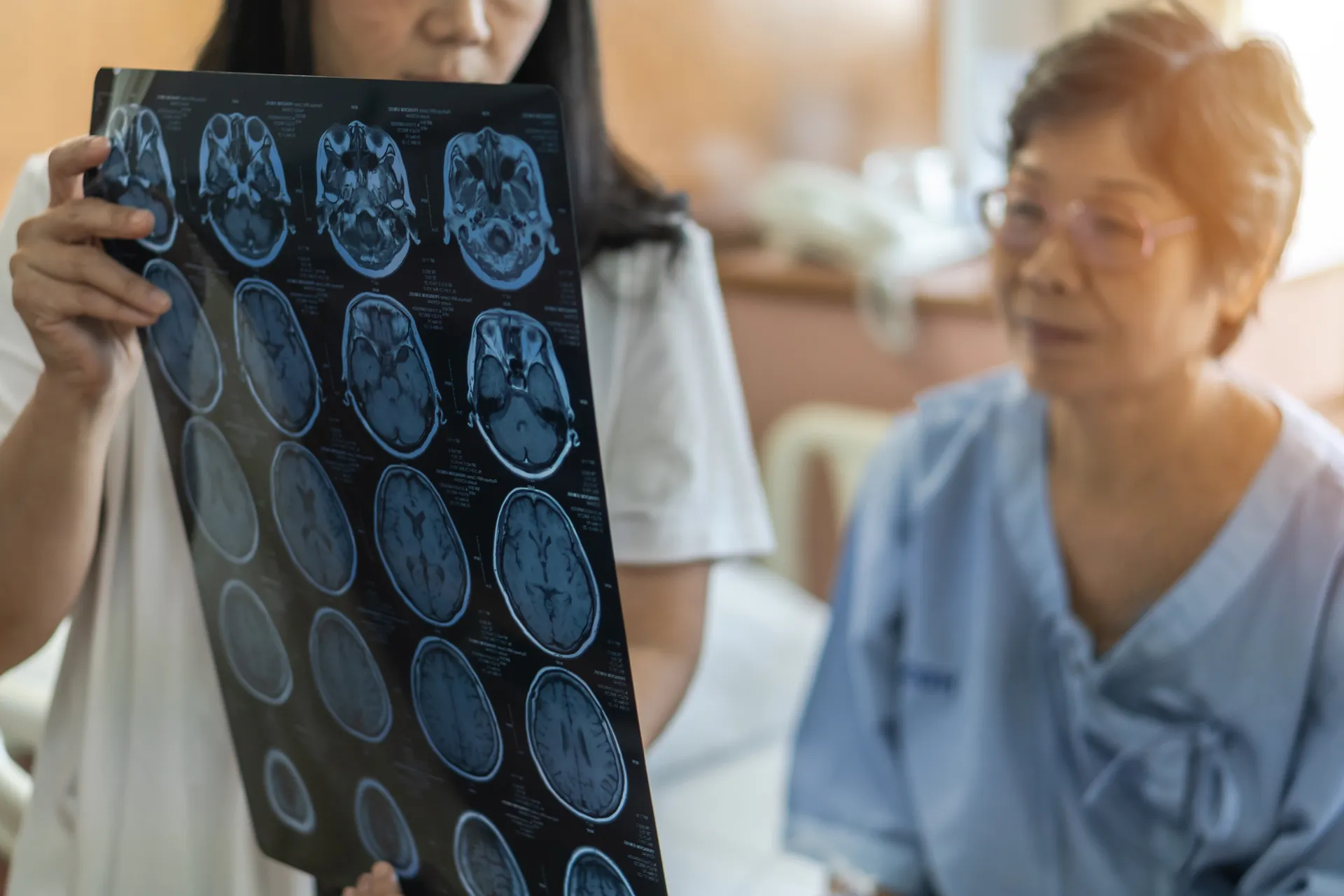
Your SeeBeyond Medicine physician documents the injury mechanism, symptom timeline, prior imaging, and current functional limitations. Prior neuropsychological assessments, imaging reports, and medication history are incorporated to build a complete clinical picture before any stimulation protocol is assigned.
02.
2. TMS Protocol Selection
SeeBeyond Medicine selects stimulation parameters targeting your dominant symptom cluster — cognitive, emotional, or pain-predominant post-concussive patterns. For patients with mixed symptom presentations, a stepwise protocol may address multiple brain networks across the course of treatment.
03.
3. Treatment Sessions
Each 20-minute session delivers magnetic pulses to the target brain region. SeeBeyond Medicine administers sessions 5 days per week during the treatment phase. The H-coil system reaches deeper cortical layers than traditional figure-8 coils, enabling precise stimulation of the prefrontal and cingulate networks most affected by concussive injury.
04.
4. Recovery Assessment
After 20 to 36 sessions, SeeBeyond Medicine reassesses cognitive function, headache frequency, and quality-of-life metrics. Maintenance sessions may extend recovery gains. Neurotransmitter re-testing at the close of the treatment course provides objective biochemical data alongside your subjective symptom improvements.
What Our Patients Say
What Our Patients Experience
Real stories from patients who found answers.
Patients at SeeBeyond Medicine with persistent post-concussion symptoms describe TMS as a turning point — the first treatment that produced measurable cognitive and emotional improvement after months of limited progress.
Frequently Asked Questions
Common Questions
How long after a concussion can I start TMS?
SeeBeyond Medicine typically evaluates patients whose symptoms persist beyond 3 months post-injury. Earlier referral may be appropriate in specific cases.
Will TMS help with post-concussion headaches?
Many patients at SeeBeyond Medicine experience significant headache reduction after TMS treatment courses. Results vary by individual and injury severity.
Is TMS safe after a brain injury?
Deep TMS is non-invasive and does not require anesthesia. SeeBeyond Medicine screens every patient for contraindications before initiating treatment.
What does TMS for post-concussion symptoms feel like?
Treatment is painless and non-invasive. You remain fully awake and alert in a comfortable chair. You will hear a soft clicking sound and may feel a gentle tapping sensation on your scalp. There is no sedation, and no recovery time is needed — most patients return to work or daily activities immediately after a session.
How long is a TMS session?
SeeBeyond Medicine's advanced protocols typically run 5 to 20 minutes per session depending on the selected protocol. An Accelerated SWIFT protocol is also available for patients seeking a more compressed treatment timeline.
How is this different from standard concussion care?
Standard concussion protocols focus on symptom management — separate medications for headaches, depression, and sleep disruption. SeeBeyond Medicine targets the root cause: the brain circuit dysfunction itself. TMS actively repairs the disrupted circuit while the functional medicine enhancements provide the biological environment for lasting recovery.
Why does SeeBeyond combine TMS with IV therapy, acupuncture, and coaching?
Research consistently shows that combining TMS with complementary therapies produces significantly better outcomes than TMS alone. A brain healing from injury is often inflamed and nutrient-depleted. SeeBeyond Medicine's functional medicine approach reduces inflammation, supplies key nutrients for neural repair, and balances brain chemistry — creating the optimal biochemical conditions for TMS to achieve lasting neural change.
Related Services
Related Services at SeeBeyond Medicine
Post-concussion TMS integrates with TMS brain injury rehabilitation, neurotransmitter testing, and hyperbaric oxygen therapy.
Take the First Step
Start Post-Concussion Recovery at SeeBeyond Medicine
Your brain can rebuild what the injury disrupted. Schedule your consultation at our Scarsdale, NY office or Greenwich, CT office.