Brain Injury Rehabilitation with TMS in Scarsdale, NY and Greenwich, CT
The concussion healed weeks ago, but the fog never lifted. Words come slower. Decisions take longer. Familiar tasks feel like they belong to someone else's brain. When recovery stalls, the injury is not gone — the neural circuits that sustained the damage have stopped repairing on their own.
SeeBeyond Medicine in Scarsdale, NY and Greenwich, CT offers deep TMS therapy for brain injury rehabilitation to reactivate neuroplasticity, restore cognitive function, and reduce persistent post-injury symptoms for patients across Westchester and Fairfield County.
Schedule your brain injury TMS assessment at SeeBeyond Medicine.
Credentials
Integrative Neurological Recovery
SeeBeyond Medicine was founded in 2006 by Dr. Hyun Joon Lee, a triple board-certified physician. Our clinical team combines deep TMS with IV nutrient therapy, methylene blue protocols, and functional diagnostics — a whole-person approach to neurological recovery that isolated treatments cannot replicate.
Proven Results Across 30+ Conditions
SeeBeyond Medicine's TMS program achieves a 91% response rate across neurological and psychiatric conditions. Board-certified physicians design every rehabilitation protocol based on your specific injury pattern.
About This Service
What Is TMS for Brain Injury Rehabilitation?
TMS for brain injury rehabilitation is a non-invasive neurostimulation therapy that delivers targeted magnetic pulses to damaged cortical regions to promote neuroplasticity, restore synaptic connectivity, and improve cognitive and motor function following concussion, traumatic brain injury, or chronic post-concussion syndrome.
The brain does not lose its capacity for repair after injury. It loses the activation signal. SeeBeyond Medicine uses deep TMS to deliver that signal directly to the neural circuits that have gone dormant.
Unlike passive recovery strategies that wait for healing, TMS actively stimulates the formation of new neural connections. Targeted repetition drives measurable change.
How TMS Reactivates Neuroplasticity After Injury
Brain injuries disrupt the electrical signaling networks that coordinate thought, emotion, and movement. The damage is not only structural — it is functional. Once-efficient circuits become underactive, desynchronized, or locked in maladaptive firing patterns that perpetuate symptoms long after the acute injury resolves.
TMS delivers precise repetitive magnetic pulses that induce electrical currents in targeted cortical tissue. High-frequency protocols increase cortical excitability and drive long-term potentiation — the same synaptic mechanism that underlies memory formation and learning. Low-frequency protocols calm hyperactive regions and restore inhibitory balance. Over a full course of treatment, this repetition reorganizes synaptic weights and strengthens neural pathways through cortical remapping — a measurable shift in how the brain allocates processing resources across damaged and compensating regions.
Research also demonstrates that TMS increases Brain-Derived Neurotrophic Factor (BDNF), a protein critical for neuron survival, new connection formation, and the recovery of cognitive and motor function lost to trauma.
The SeeBeyond Enhanced TMS Protocol
Standard TMS clinics apply magnetic stimulation and stop there. SeeBeyond Medicine's Enhanced TMS Protocol addresses the full biochemical environment your brain needs to respond to stimulation and sustain improvement.
Our four-pillar approach integrates:
- Neurotransmitter Testing — Serotonin, dopamine, norepinephrine, and GABA levels are measured before and after your TMS course. Objective data guides personalization and tracks real change in brain chemistry, not just reported symptoms.
- Calm IV Therapy — Intravenous magnesium and B vitamins administered alongside TMS sessions reduce neuroinflammation, support neurotransmitter production, and optimize the biochemical conditions in which neural repair occurs.
- Integrated Acupuncture — Combined with TMS, acupuncture elevates BDNF, reduces inflammation, improves cerebral circulation, and helps regulate the dysregulated stress response that frequently follows brain injury.
- Health Coach Brain Health Sessions — Nutrition, sleep architecture, supplementation, and targeted cognitive exercise guidance extends recovery beyond the clinic and reinforces the gains made during active treatment.
What to Expect During TMS Sessions
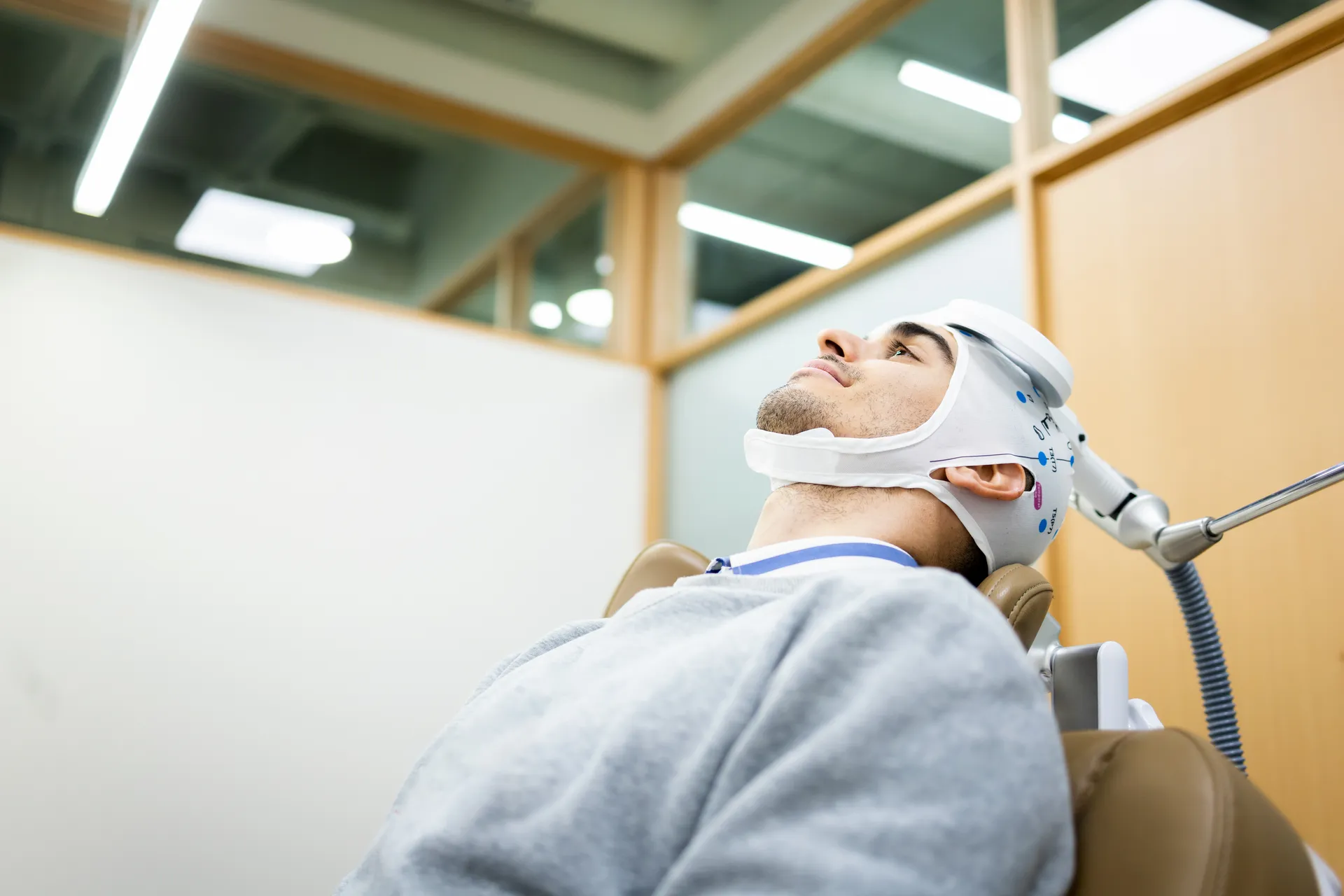
TMS sessions at SeeBeyond Medicine's Scarsdale, NY office and Greenwich, CT office are non-invasive and require no anesthesia or sedation. During each session, a specialized coil is positioned over the target cortical region and you will feel a gentle tapping sensation on the scalp as pulses are delivered. Sessions last 20 to 40 minutes. There is no recovery time — patients resume normal activities immediately afterward.
A standard brain injury rehabilitation course involves daily sessions five days per week over several weeks. The exact duration is shaped by injury severity, symptom duration, and objective response to treatment, assessed through cognitive testing at each phase.
Is TMS Right for Your Brain Injury Recovery?
SeeBeyond Medicine's brain injury TMS program serves patients who:
- Experience persistent brain fog, memory problems, difficulty concentrating, or slowed processing speed months or years post-injury
- Struggle with post-injury depression, anxiety, irritability, or emotional instability that has not responded adequately to medication
- Suffer from chronic post-concussion headaches or migraines
- Want a non-pharmaceutical, non-invasive approach to accelerate neurological recovery
- Have plateaued with traditional rehabilitation and are seeking a root-cause intervention that addresses the underlying circuit disruption
Although TMS is FDA-cleared for depression and OCD, its application to traumatic brain injury and post-concussion syndrome is supported by a growing body of clinical evidence demonstrating measurable improvements in cognition, pain, motor function, and neuropsychiatric symptoms. Dr. Hyun Joon Lee reviews each patient's injury history, imaging, and symptom profile to confirm candidacy before any protocol begins.
Conditions Treated
Post-Concussion Syndrome
Persistent headaches, brain fog, light sensitivity, and cognitive impairment that linger months or years after concussion respond to targeted neurostimulation. SeeBeyond Medicine treats patients whose symptoms have outlasted every expected healing timeline.
Benefits
Neuroplasticity Reactivation
What to Expect
Your Journey
01.
1. Comprehensive Neurological Assessment
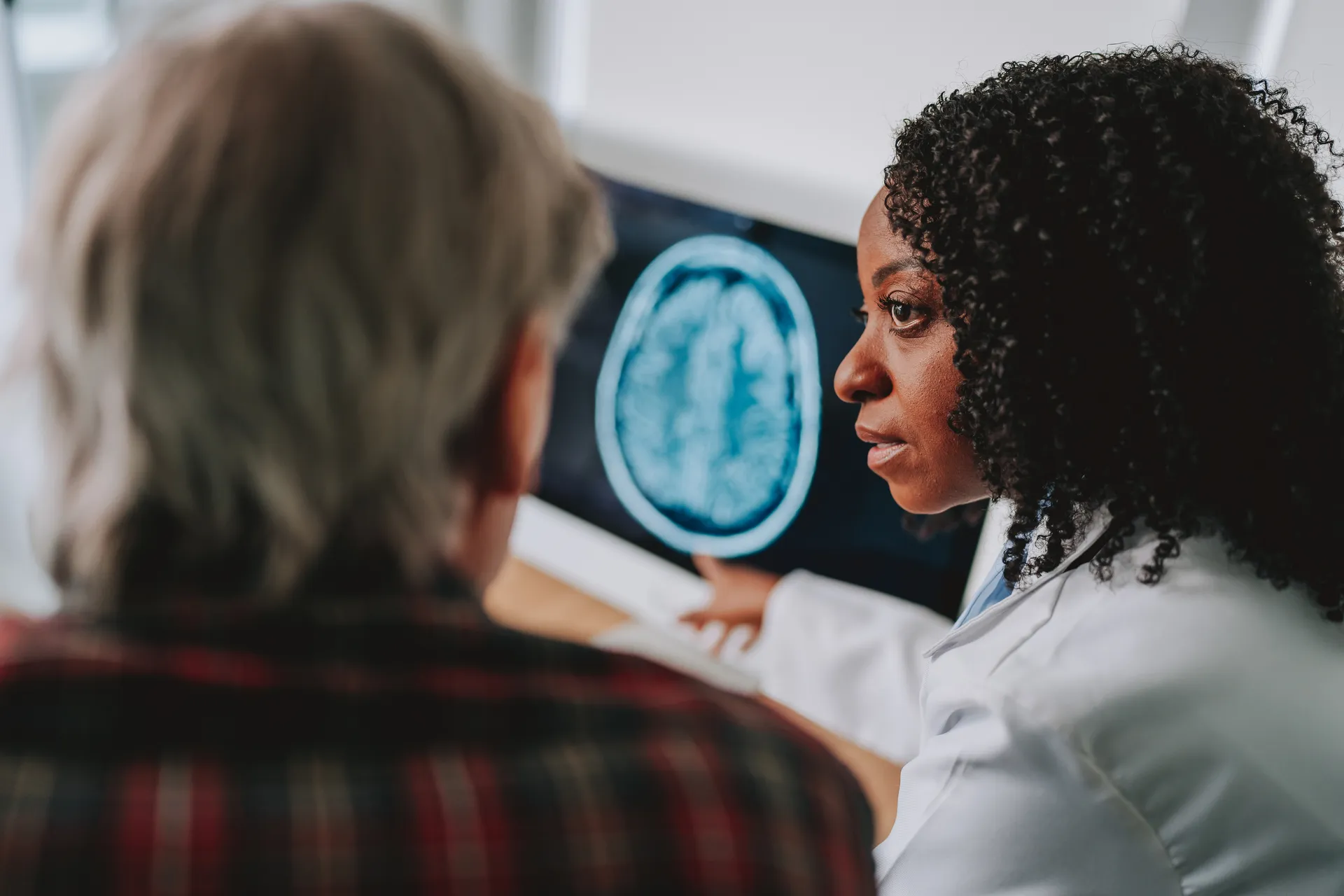
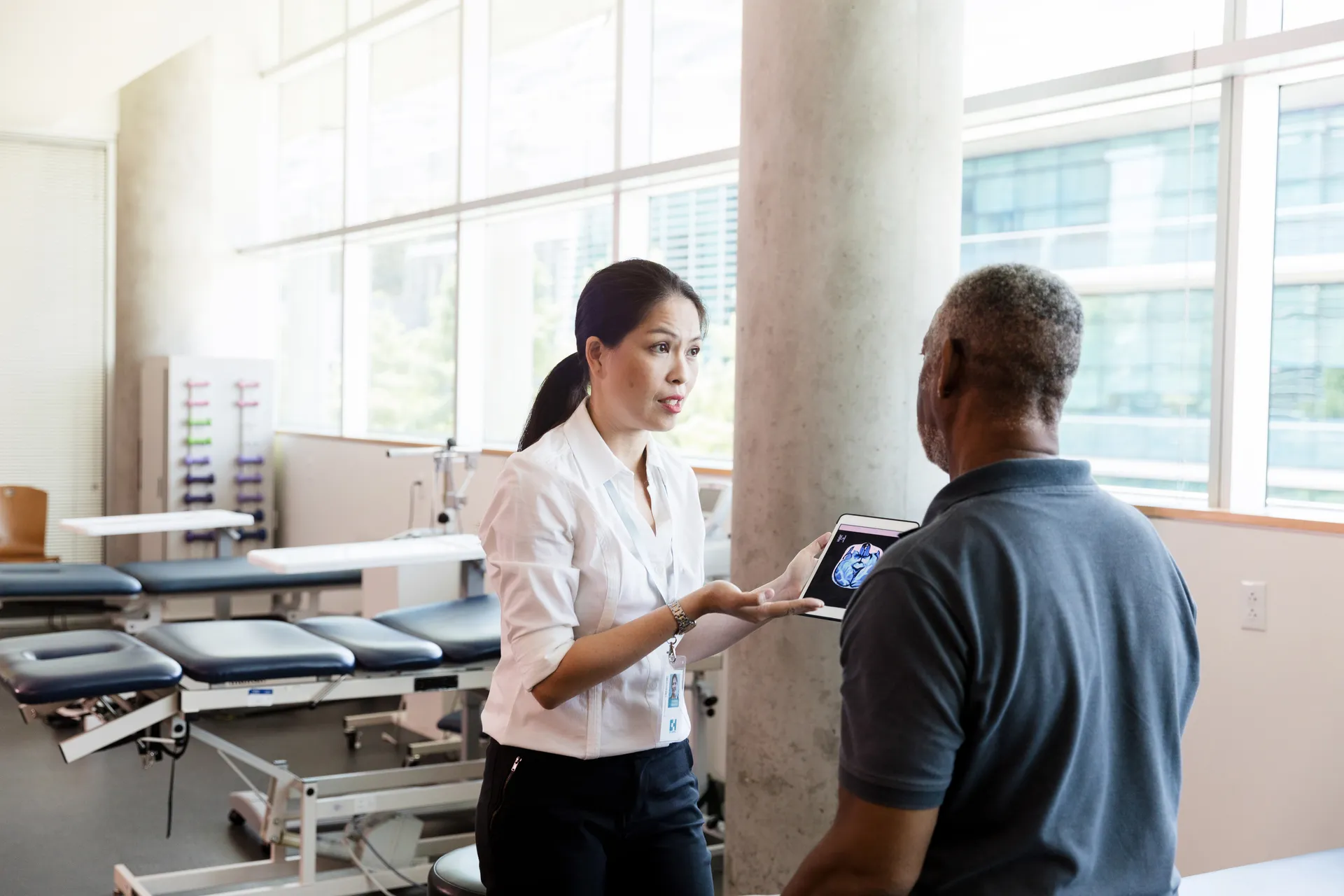
Your physician evaluates injury history, imaging results, current symptoms, and cognitive testing. SeeBeyond Medicine determines TMS candidacy and maps the specific neural targets for your rehabilitation protocol. Neurotransmitter testing may be ordered at this stage to establish your biochemical baseline before stimulation begins.
02.
2. Targeted Treatment Sessions
Sessions last approximately 20 to 40 minutes at our Scarsdale, NY office or Greenwich, CT office. Treatment courses vary based on injury severity, typically spanning 4 to 8 weeks with sessions 5 days per week. Calm IV therapy and integrated acupuncture are scheduled alongside TMS sessions according to your personalized protocol.
03.
3. Rehabilitation Monitoring and Adjustment
SeeBeyond Medicine tracks cognitive and symptomatic improvement throughout treatment. Your physician adjusts stimulation parameters based on objective testing and your reported experience. Neurotransmitter levels are re-evaluated after your course to quantify measurable changes in brain chemistry alongside symptom improvements.
04.
4. Ongoing Brain Health Support
After your primary TMS course concludes, SeeBeyond Medicine's health coaches continue working with you on nutrition, sleep, supplementation, and cognitive exercise to consolidate treatment gains. Maintenance TMS sessions can be scheduled based on your long-term recovery trajectory and goals.
What Our Patients Say
Patient Experiences
Real stories from patients who found answers.
"A car accident left me with brain fog that lasted over a year. Two months of TMS at SeeBeyond Medicine restored my ability to think clearly and return to work. My neurologist was surprised by the improvement."
— Patient, Westchester County
Frequently Asked Questions
Common Questions
How soon after a brain injury can TMS begin?
SeeBeyond Medicine evaluates patients individually. TMS is typically appropriate once acute inflammation has resolved, often 4 to 8 weeks post-injury. Earlier evaluation ensures readiness when the window opens.
How many sessions are needed for brain injury rehabilitation?
Treatment courses vary by injury severity and duration. Most patients complete 20 to 40 sessions. SeeBeyond Medicine adjusts the protocol based on cognitive testing and symptomatic progress.
Is TMS covered by insurance for brain injury?
SeeBeyond Medicine is a private-pay, concierge-style practice that does not participate with insurance companies. This model allows our physicians to dedicate the time and comprehensive care necessary for optimal outcomes, without the constraints imposed by insurance protocols. We provide full cost transparency before treatment begins.
What does TMS feel like during a session?
TMS is comfortable and non-invasive. You will feel a gentle tapping sensation on the scalp as the magnetic pulses are delivered to the target region. Most patients find the experience easy to tolerate and use the time to rest or listen to music. No anesthesia is required, and you can resume normal activities immediately after each session.
What improvements can I expect from TMS for brain injury?
Clinical evidence and patient outcomes at SeeBeyond Medicine show improvements across multiple domains: reduced brain fog and cognitive fatigue, better concentration and memory recall, decreased headache frequency and severity, improved mood stability and reduced anxiety, and faster processing speed. Patients who complete the Enhanced TMS Protocol — which adds IV therapy, acupuncture, and health coaching — tend to experience more comprehensive and durable gains than those treated with stimulation alone.
Why does SeeBeyond Medicine combine TMS with functional medicine?
Brain injuries are multi-system problems. TMS addresses the electrical disruptions in damaged circuits, but neuroinflammation, neurotransmitter imbalances, nutritional deficiencies, and poor sleep all prevent the brain from fully consolidating TMS-driven repair. SeeBeyond Medicine's Enhanced TMS Protocol targets each of these dimensions simultaneously, giving the brain every biochemical advantage needed for lasting recovery.
Is TMS safe after a brain injury?
Yes. TMS has an excellent safety profile with minimal side effects and no systemic impact. It does not require surgery, anesthesia, or medication. During your initial consultation, Dr. Hyun Joon Lee reviews your complete medical history and any available imaging to confirm that TMS is appropriate for your specific injury type and presentation.
Related Services
Related Services at SeeBeyond Medicine
- TMS Therapy — Non-invasive brain stimulation for 30+ neurological and psychiatric conditions
- IV Methylene Blue — Mitochondrial support for neurological recovery
- IV Brain Power — Neurocognitive IV support with amino acids and B vitamins
- Hyperbaric Oxygen Therapy — Pressurized oxygen for neural healing and tissue repair
Take the First Step
Recovery Did Not Stop — It Stalled. TMS Can Restart It.
Even if months or years have passed since your injury, even if you have been told that this is your new normal, your brain retains the capacity for repair. SeeBeyond Medicine's deep TMS therapy for brain injury rehabilitation delivers the activation signal your neural circuits need to resume healing.
Book your brain injury TMS assessment in Scarsdale or Greenwich. | Call: (914) 768-1658