

BPD Treatment with TMS
Living with borderline personality disorder means emotions arrive at full volume. Relationships feel unstable, reactions feel uncontrollable, and the gap between what you want to feel and what you actually feel can seem impossible to close. SeeBeyond Medicine in Scarsdale, NY and Greenwich, CT offers deep TMS therapy to strengthen the neural circuits that regulate emotional response.
This is not about fixing who you are. TMS supports the brain regions responsible for emotional regulation so therapy and daily life become more manageable.
91% TMS response rate across 30+ conditions.
Book your BPD treatment assessment with TMS in Scarsdale, NY or Greenwich, CT
Credentials
Why SeeBeyond Medicine
Dr. Hyun Joon Lee founded SeeBeyond Medicine in 2006 with a single principle: test, don't guess. He holds triple board certification in Family Medicine, Integrative Holistic Medicine, and Obesity Medicine.
The practice has treated over 20,000 patients across Westchester and Fairfield County. Dr. Lee's affiliation with Einstein College of Medicine informs every TMS protocol with current neuroscience research.
Our Scarsdale, NY office and Greenwich, CT office both offer physician-supervised deep TMS therapy for borderline personality disorder.
About This Service
What Is BPD Treatment with TMS?
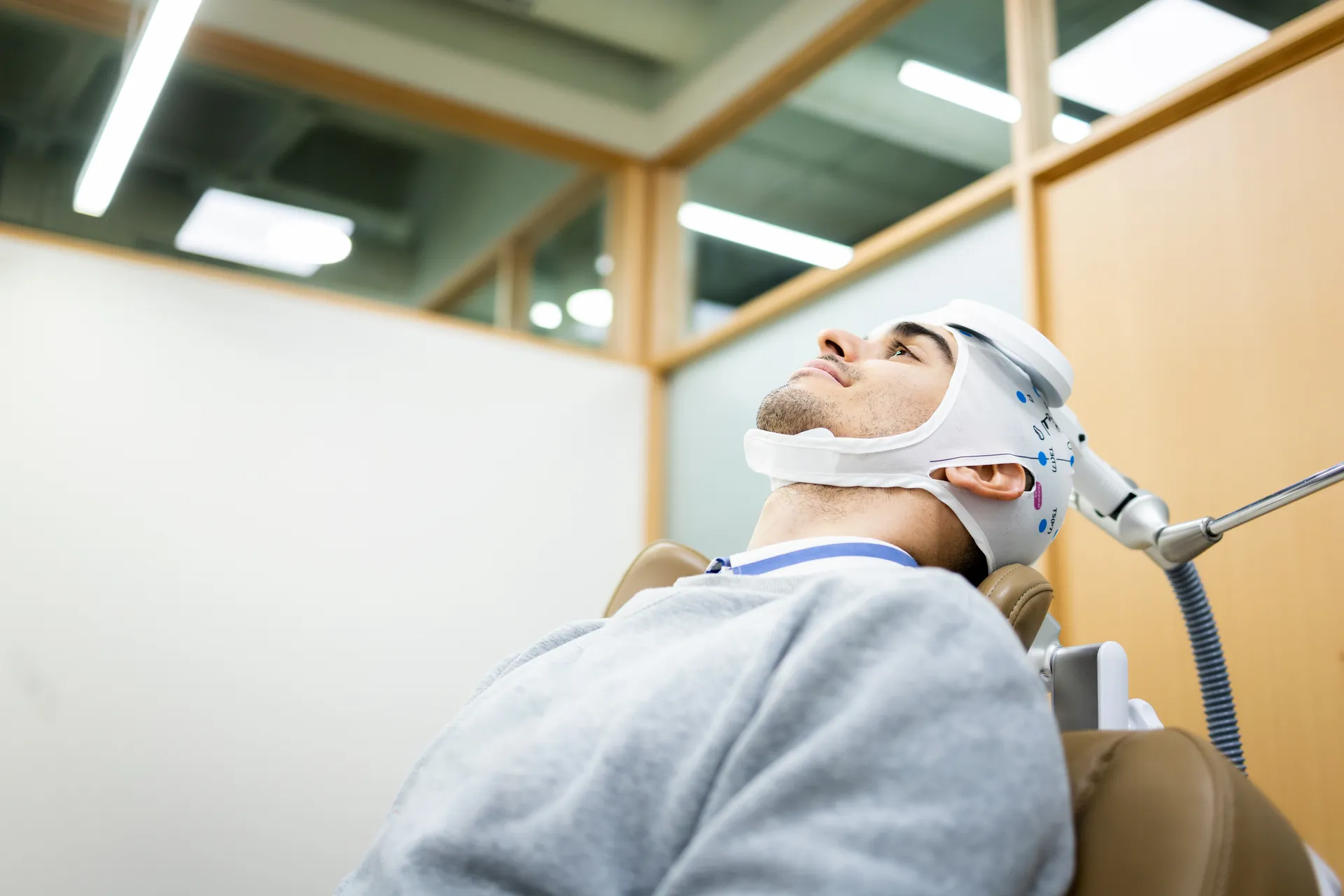
Transcranial magnetic stimulation (TMS) is a non-invasive neuromodulation technique that delivers focused magnetic pulses to specific cortical regions. In borderline personality disorder, TMS targets the dorsolateral prefrontal cortex and connected limbic structures to modulate prefrontal-limbic circuit activity associated with emotional dysregulation, impulsivity, and interpersonal sensitivity.
Conventional BPD treatment relies primarily on psychotherapy and medication. Dialectical behavior therapy teaches skills for emotional regulation, but the underlying neural circuitry can make those skills difficult to access during high-intensity emotional episodes.
Deep TMS addresses that gap directly. Magnetic pulses strengthen prefrontal inhibitory control over limbic reactivity. That restored prefrontal activity helps patients apply therapeutic skills more consistently between sessions.
SeeBeyond Medicine integrates TMS into your existing treatment plan rather than replacing the psychotherapy and support systems you already have in place.
Conditions Treated
Emotional Dysregulation
Intense emotional reactions that arrive without warning and escalate rapidly are a hallmark of BPD. Deep TMS modulates the prefrontal cortex to strengthen top-down emotional regulation. SeeBeyond Medicine tracks self-reported emotional intensity and clinical measures throughout treatment.

Benefits
Strengthened Emotional Regulation
Strengthened Emotional Regulation
TMS reinforces the prefrontal circuits that govern emotional modulation. Patients describe the effect as gaining a pause between trigger and reaction. SeeBeyond Medicine measures this improvement through validated clinical scales at regular intervals.
Enhanced Therapy Response
When prefrontal function improves, dialectical behavior therapy and cognitive behavioral therapy become more effective. The coping skills you learn in therapy are easier to access during high-stress moments. Our physicians coordinate with your therapist to align TMS protocols with your therapeutic goals.
Non-Pharmacological and Non-Invasive
TMS requires no medication, no sedation, and no recovery time. Each session lasts 20 to 40 minutes, and you return to normal activities immediately afterward. This is especially valuable for patients who are sensitive to medication side effects or want to reduce pharmacological load.
What to Expect
Your Journey
Clinical Assessment
Your physician and care team evaluate your BPD diagnosis, current treatment plan, and goals. TMS is designed to complement — not replace — your existing therapeutic approach.
Brain Mapping
Precise mapping identifies the optimal treatment location on your prefrontal cortex for targeted stimulation.
Treatment Series
Standard protocols involve daily sessions (weekdays) over 4-6 weeks, each lasting 20-40 minutes. You remain awake and comfortable throughout.
Ongoing Evaluation
Your physician monitors emotional regulation, impulsivity, and quality of life measures throughout treatment. Protocol adjustments are made based on your response.
What Our Patients Say
Patient Experiences with TMS for BPD
Real stories from patients who found answers.
Patients exploring TMS as part of their care for borderline personality disorder at SeeBeyond Medicine often value the non-invasive nature of the treatment and the way each session is tailored and closely supervised. Many appreciate a physician who explains how TMS fits alongside their broader treatment and takes time to answer their questions.
TMS is used as one part of a comprehensive treatment plan, not a stand-alone cure, and individual responses vary. SeeBeyond Medicine evaluates each patient's suitability individually and provides TMS within established clinical guidelines, coordinating with a patient's wider mental health care.
Frequently Asked Questions
Common Questions
Can TMS replace my psychotherapy or medication for BPD?
TMS is designed as a complementary treatment alongside dialectical behavior therapy, cognitive behavioral therapy, and any prescribed medications. SeeBeyond Medicine coordinates with your existing treatment team. The goal is to make your current therapies more effective, not to replace them.
How many TMS sessions does SeeBeyond Medicine recommend for BPD?
Standard protocols involve 20 to 36 sessions over four to six weeks. Your physician recommends a specific plan based on your clinical assessment and response to treatment. Some patients benefit from maintenance sessions after the initial series.
Is TMS safe for patients with borderline personality disorder?
TMS has a well-established safety profile with no systemic side effects. The most common sensation is mild scalp discomfort during the first few sessions, which typically fades. No sedation or medication is required.
When will I notice changes in emotional regulation?
Many patients report subtle improvements in emotional reactivity within the first two to three weeks. Full benefits typically develop over the complete treatment series. Your physician monitors progress at regular intervals using validated clinical scales.
Related Services
Related Services
- TMS Therapy Overview — full deep TMS program details for 30+ conditions
- Anxiety and Mood Disorders TMS — TMS protocols for co-occurring anxiety and mood conditions
- Trauma Recovery TMS — TMS support for trauma-related emotional dysregulation
Take the First Step
Your Emotions Do Not Have to Control Your Life
Even if talk therapy and medication have not given you the emotional stability you need, deep TMS may strengthen the brain circuits that make regulation possible. SeeBeyond Medicine's physicians evaluate your diagnosis, neural profile, and treatment history to determine whether TMS fits your care plan.
You are not your diagnosis. Recovery is possible.
Schedule a Free Consultation at SeeBeyond Medicine in Scarsdale, NY or Greenwich, CT | Call: 914-722-9440