
Trauma Recovery TMS in Scarsdale, NY and Greenwich, CT
Your body remembers what your mind has tried to set aside. At SeeBeyond Medicine in Westchester and Fairfield County, deep transcranial magnetic stimulation (TMS) reaches the neural circuits that hold trauma in place — without asking you to relive a single moment.
Whether your trauma carries a diagnosis or not, your nervous system deserves relief. SeeBeyond Medicine's trauma recovery TMS offers a path forward that begins in the brain itself.
Schedule your trauma recovery TMS consultation in Scarsdale or Greenwich
Credentials
Trauma-Informed Neuromodulation, Rooted in Two Decades of Care
Since 2006, SeeBeyond Medicine has treated over 20,000 patients under the direction of Dr. Hyun Joon Lee, triple board-certified in Family Medicine, Integrative Holistic Medicine, and Obesity Medicine. Our deep TMS program spans 30+ conditions with a 91% response rate.
Trauma recovery requires both clinical precision and genuine compassion. SeeBeyond Medicine brings both to every session at our Scarsdale, NY office and Greenwich, CT office.
About This Service
What Is TMS for Trauma Recovery?
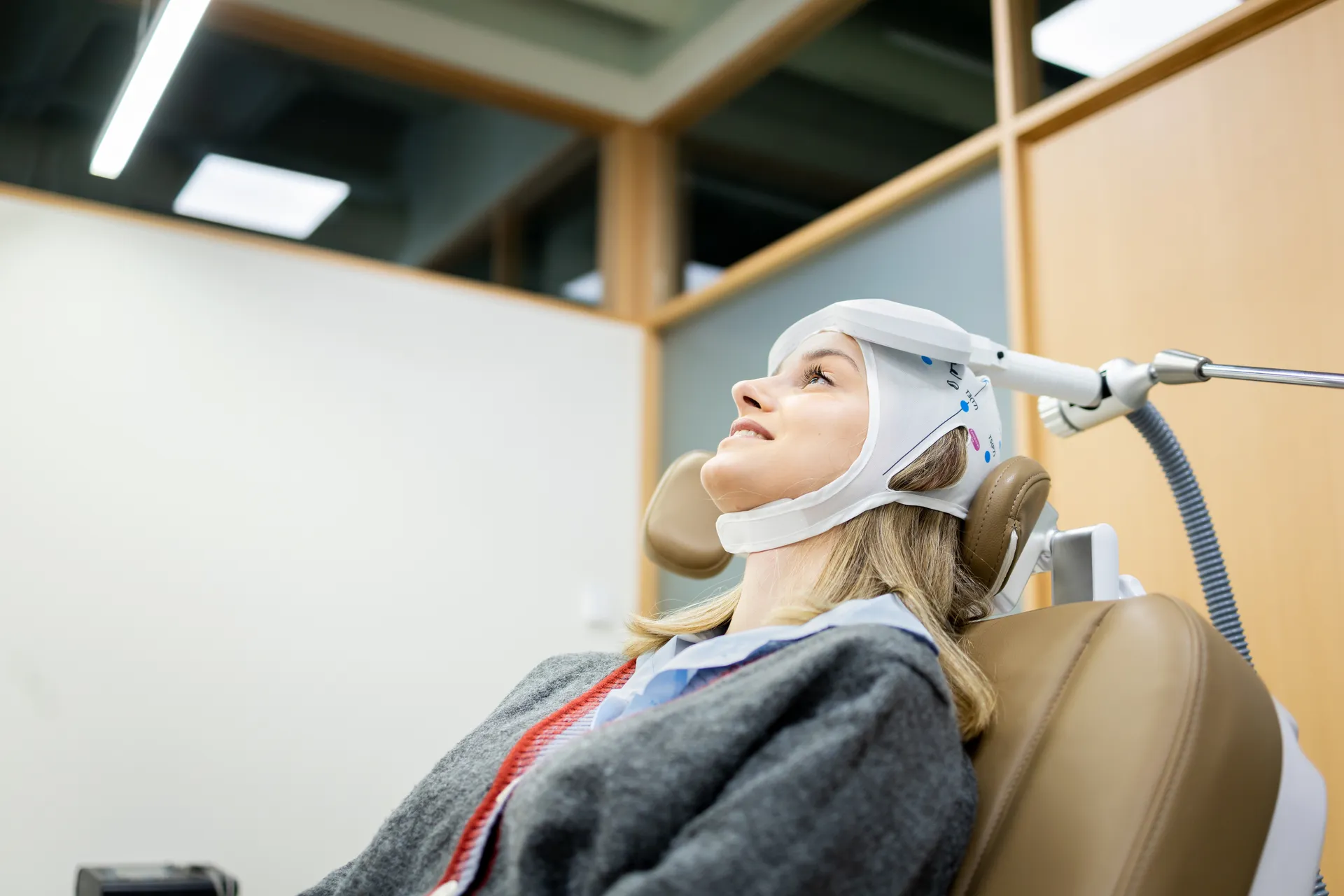
Deep transcranial magnetic stimulation for trauma recovery delivers focused magnetic pulses to the prefrontal cortex and anterior cingulate cortex — the brain regions governing fear extinction, emotional processing, and top-down inhibition of the amygdala — to restore adaptive neural control over trauma-driven hyperarousal and avoidance.
Unlike surface-level TMS, SeeBeyond Medicine's deep TMS technology accesses subcortical limbic structures. This means direct modulation of the amygdala-mediated fear circuits that sustain trauma responses long after the original event.
TMS works through a non-verbal therapeutic pathway. SeeBeyond Medicine's patients do not need to narrate or revisit their trauma to benefit. The magnetic field does what words sometimes cannot.
Conditions Treated
Hyperarousal and Hypervigilance
A nervous system locked in threat detection reflects amygdala overactivation and weakened prefrontal regulation. SeeBeyond Medicine's TMS protocols restore the balance between alarm and calm.
Hyperarousal and Hypervigilance
A nervous system locked in threat detection reflects amygdala overactivation and weakened prefrontal regulation. SeeBeyond Medicine's TMS protocols restore the balance between alarm and calm.
Emotional Numbing and Avoidance
When the brain protects itself by shutting down feeling, anterior cingulate cortex dysfunction is often the mechanism. TMS at SeeBeyond Medicine reactivates these circuits to gradually restore emotional range.
Intrusive Re-Experiencing
Flashbacks and unbidden sensory memories arise from overconsolidated fear networks. SeeBeyond Medicine targets the memory-emotion interface to reduce the grip of intrusive symptoms.
Complex, Developmental, and Subclinical Trauma
Not every trauma response meets the criteria for a formal PTSD diagnosis. SeeBeyond Medicine evaluates patients with complex trauma histories, childhood developmental trauma, and subclinical trauma patterns that still disrupt daily life.

Benefits
Direct Neural Circuit Repair
Direct Neural Circuit Repair
TMS addresses the specific brain regions altered by traumatic experience. SeeBeyond Medicine uses this root-cause approach rather than managing symptoms alone.
No Reliving Required
Many patients stall in traditional therapy because revisiting trauma feels unbearable. TMS at SeeBeyond Medicine provides a neuromodulation pathway that bypasses the need for verbal re-exposure.
Whole-Person Integrative Support
SeeBeyond Medicine combines TMS with stress-reduction protocols, IV nutrient support, and therapy referral coordination. Trauma recovery is never just one intervention — it is a sustained, personalized process.
What to Expect
Your Journey
01.
1. Trauma-Sensitive Evaluation
Your assessment includes trauma history screening, symptom severity review, and neurological baseline testing. SeeBeyond Medicine's physicians meet you where you are — no pressure to disclose more than you are ready to share.
02.
2. Personalized Deep TMS Protocol
SeeBeyond Medicine designs a condition-specific protocol targeting your trauma-related neural patterns. Sessions are typically scheduled 5 days per week for 4 to 6 weeks.
03.
3. Guided Treatment Sessions
Each session lasts approximately 20 to 30 minutes at our Scarsdale or Greenwich clinic. SeeBeyond Medicine's clinical team prioritizes safety, comfort, and emotional steadiness throughout.
04.
4. Ongoing Recovery and Monitoring
Post-treatment assessments track emotional regulation, symptom frequency, and daily functioning. SeeBeyond Medicine adjusts maintenance and integrative support based on your progress.
What Our Patients Say
What Patients Experience
Real stories from patients who found answers.
Patients undergoing trauma recovery TMS at SeeBeyond Medicine describe a gradual quieting of the nervous system — fewer startle responses, deeper sleep, and a renewed ability to engage in relationships and therapy that previously felt out of reach.
Recovery looks different for everyone. SeeBeyond Medicine honors that.
Frequently Asked Questions
Common Questions
Do I need a PTSD diagnosis to qualify?
No. SeeBeyond Medicine treats patients with complex trauma, developmental trauma, and subclinical trauma responses. A formal PTSD diagnosis is not required.
Can I continue therapy during TMS?
Yes, and SeeBeyond Medicine encourages it. TMS strengthens the prefrontal circuits involved in emotional regulation, which often makes concurrent psychotherapy more productive.
How many sessions will I need?
A standard course at SeeBeyond Medicine includes 20 to 30 sessions over 4 to 6 weeks. Patients with layered or developmental trauma may benefit from extended protocols.
Is the treatment painful?
TMS is non-invasive and well-tolerated. Most patients describe a tapping sensation on the scalp. SeeBeyond Medicine monitors comfort at every session.
Related Services
Related Services at SeeBeyond Medicine
- TMS Therapy Overview for full program details
- TMS for PTSD for diagnosis-specific TMS protocols
- TMS for Anxiety and Mood Disorders for co-occurring anxiety treatment
- Ketamine Therapy for treatment-resistant trauma symptoms
Take the First Step
You Do Not Have to Carry This Alone
Even if years of therapy and medication have brought only partial relief, deep TMS offers a neurological pathway toward healing that begins beneath the surface. SeeBeyond Medicine's integrative team in Scarsdale and Greenwich is here for you — with clinical expertise and the patience your recovery deserves.