

TMS for Personality Disorder Therapy in Scarsdale, NY and Greenwich, CT
Personality disorders involve deeply ingrained neural patterns that resist conventional talk therapy and medication. SeeBeyond Medicine's deep TMS personality disorder protocols in Westchester and Fairfield County target the prefrontal and limbic circuits that regulate emotional processing, impulse control, and interpersonal behavior.
Schedule your personality disorder TMS consultation at SeeBeyond Medicine today.
Credentials
Advanced Neuropsychiatric TMS at SeeBeyond Medicine
SeeBeyond Medicine's deep TMS program achieves a 91% response rate across 30+ conditions. Dr. Hyun Joon Lee applies precision H-coil protocols to the brain regions implicated in personality disorder symptomatology.
Treatment is available at our Scarsdale, NY office and Greenwich, CT office.
About This Service
What Is TMS for Personality Disorders?
Deep TMS for personality disorders applies targeted magnetic stimulation to the dorsolateral prefrontal cortex, anterior cingulate cortex, and orbitofrontal regions involved in emotional regulation, impulse control, and social decision-making. Modulating activity in these circuits can reduce the emotional volatility, interpersonal reactivity, and self-destructive patterns associated with personality disorders.
SeeBeyond Medicine uses TMS as an adjunctive therapy alongside psychotherapy and, when appropriate, medication management.
The Brain Circuits Behind Personality Disorders
Personality disorders — particularly borderline personality disorder (BPD) — are not simply learned behaviors or chemical imbalances. At their neurological core they involve overactive emotional centers, especially the amygdala, and underactive regulatory regions including the ventrolateral prefrontal cortex (VLPFC), dorsolateral prefrontal cortex (DLPFC), and anterior cingulate cortex (ACC). This imbalance produces the emotional storms, impulsivity, and interpersonal instability that resist conventional medication and years of talk therapy. Antidepressants and mood stabilizers address neurochemistry but cannot fully correct the underlying electrical dysfunction in these regulatory circuits. Until those circuits are directly targeted, symptoms persist regardless of how much therapeutic work a patient invests.
How Deep TMS Recalibrates the Emotional Regulation Network
TMS delivers precisely calibrated magnetic pulses to the underactive prefrontal and anterior cingulate regions, strengthening the brain's top-down control over the hyperactive amygdala. Dr. Hyun Joon Lee uses H-coil deep TMS at SeeBeyond Medicine because H-coil technology reaches deeper cortical and subcortical targets than conventional figure-eight coils, making it particularly suited to the limbic-prefrontal pathways involved in personality disorder symptomatology. Clinical research demonstrates that even a focused TMS course — as few as 10 sessions — can produce measurable reductions in anger intensity, emotional reactivity, impulsivity, and overall BPD symptom severity, with continued gains across a full treatment course of 20 to 36 sessions.
SeeBeyond's Enhanced TMS Protocol
At SeeBeyond Medicine, Dr. Hyun Joon Lee's Enhanced TMS Protocol integrates four evidence-based components alongside H-coil stimulation to address every dimension of neurological and physiological health:
- Neurotransmitter testing (pre- and post-treatment): Comprehensive laboratory measurement of serotonin, dopamine, GABA, glutamate, and norepinephrine establishes your neurochemical baseline and documents measurable change after treatment — objective proof of neural transformation, not just subjective self-report.
- Calm IV therapy: Intravenous magnesium and B vitamins calm nervous system hyperactivity, support neurotransmitter synthesis, and create the optimal neurochemical environment for TMS stimulation to take hold and sustain effect.
- Acupuncture: Integrated acupuncture sessions reduce systemic inflammation that contributes to emotional dysregulation, balance autonomic tone, and promote Brain-Derived Neurotrophic Factor (BDNF) — a growth protein essential for forming new, adaptive neural pathways during and after TMS treatment.
- Health coach brain health sessions: One-on-one coaching delivers evidence-based strategies for stress regulation, sleep hygiene, nutritional optimization, and lifestyle modifications that sustain TMS gains long after the active treatment course ends.
Who Is a Candidate for TMS Personality Disorder Therapy?
TMS at SeeBeyond Medicine is suited for individuals who have a diagnosis of borderline personality disorder or exhibit significant traits including emotional dysregulation, impulsivity, anger outbursts, relationship instability, or chronic emptiness. Ideal candidates have engaged in DBT or CBT with partial but incomplete results and seek a neurological complement to ongoing therapy, or are frustrated by limited medication effectiveness and significant side effects. TMS for personality disorders is used off-label at SeeBeyond Medicine, supported by clinical research demonstrating significant reductions in emotional dysregulation, impulsivity, aggression, mood instability, and self-harm behaviors. All patients are evaluated individually during a comprehensive initial consultation at our Scarsdale, NY office or Greenwich, CT office.
What to Expect During Treatment
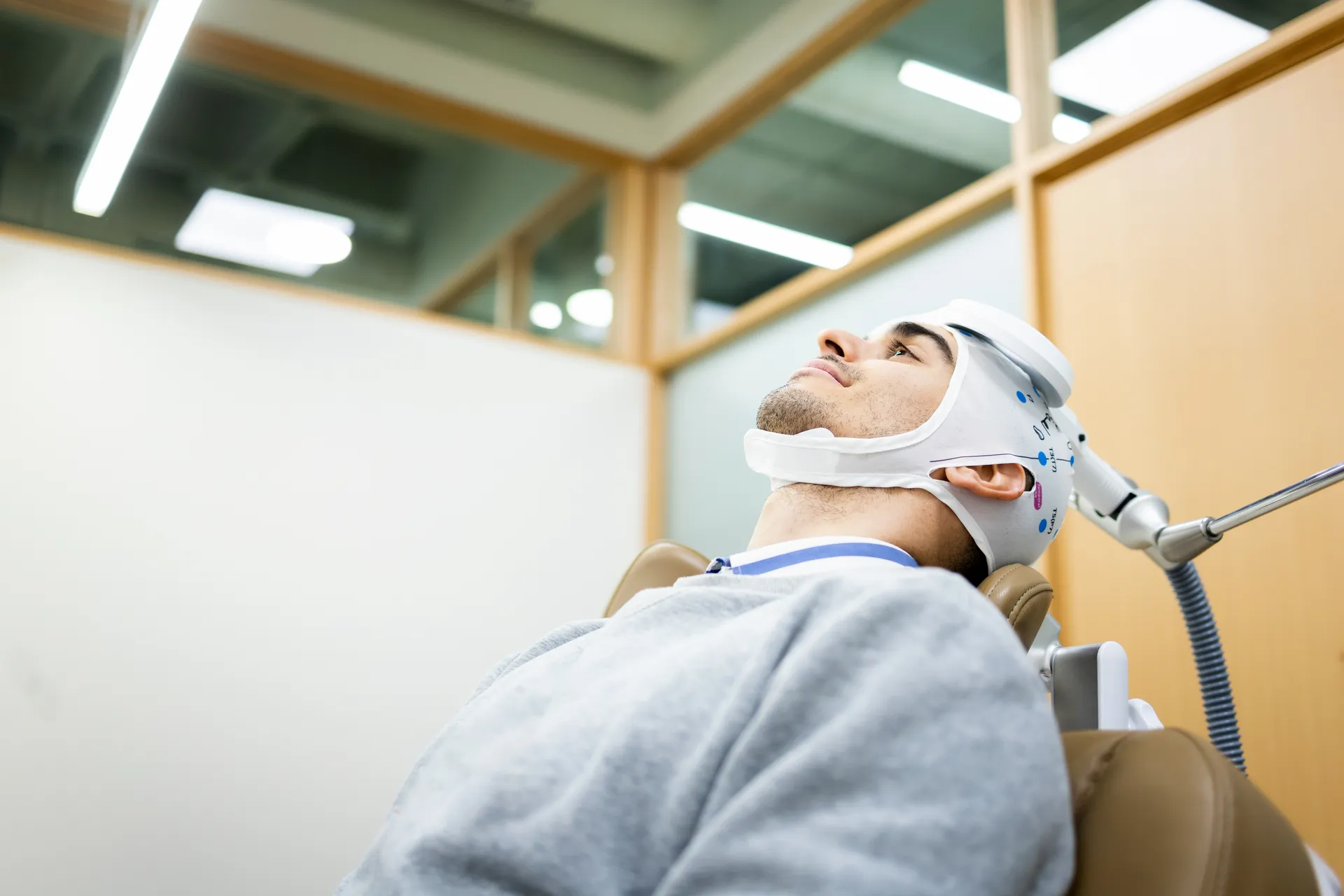
Each session at SeeBeyond Medicine lasts 20 to 40 minutes depending on your customized protocol. Patients experience a gentle, rhythmic tapping sensation at the scalp — no anesthesia, no sedation, and no recovery time required. You remain fully conscious and alert throughout each session and can immediately resume all normal activities afterward. Sessions are scheduled five days per week during the active phase. Most personality disorder protocols at SeeBeyond Medicine span 20 to 36 sessions over four to six weeks, with ongoing symptom tracking and neurotransmitter retesting used to guide decisions about maintenance sessions and medication adjustments in close collaboration with your prescribing psychiatrist.
Conditions Treated
Personality Disorder Presentations Treated with TMS
SeeBeyond Medicine applies deep TMS to borderline personality disorder presentations, including emotional dysregulation, impulsivity, self-harm urges, and unstable interpersonal patterns. Narcissistic and avoidant personality patterns with underlying mood circuit dysfunction may also respond.
Patients at SeeBeyond Medicine who have not achieved sufficient stability through psychotherapy and medication alone benefit from TMS as a circuit-level intervention.

Benefits
Emotional Circuit Regulation
What to Expect
Your Journey
01.
1. Diagnostic Assessment
Your SeeBeyond Medicine physician evaluates your personality disorder diagnosis, symptom patterns, treatment history, and current psychotherapy involvement. Baseline neurotransmitter testing is ordered at this stage to establish your neurochemical profile before stimulation begins, giving Dr. Hyun Joon Lee an objective foundation for protocol design.
02.
2. Protocol Customization
SeeBeyond Medicine selects H-coil parameters targeting the specific brain circuits driving your symptoms. Stimulation frequency and intensity are calibrated to your presentation. Calm IV therapy and acupuncture sessions are also scheduled to optimize the neurochemical environment alongside magnetic stimulation — addressing both the electrical and biochemical dimensions of your condition.
03.
3. Treatment Sessions
Each 20- to 40-minute session delivers focused magnetic pulses to the targeted prefrontal and limbic regions. SeeBeyond Medicine administers treatments five days per week during the active phase. Patients remain fully alert throughout, experience no sedation or anesthesia, and can return to all normal activities immediately after each session.
04.
4. Progress Evaluation
Symptom tracking and clinical reassessment after 20 to 36 sessions guide decisions about maintenance sessions. SeeBeyond Medicine coordinates progress reports with your psychotherapist and conducts post-treatment neurotransmitter testing to document measurable neurochemical changes — evaluating whether medication adjustments or tapering are warranted in collaboration with your prescribing psychiatrist.
What Our Patients Say
What Our Patients Experience
Real stories from patients who found answers.
Patients at SeeBeyond Medicine report greater emotional stability, fewer impulsive episodes, and improved capacity for therapeutic engagement after completing TMS courses.
Frequently Asked Questions
Common Questions
Can TMS treat borderline personality disorder?
Deep TMS targets the brain circuits underlying BPD symptoms. SeeBeyond Medicine uses it as an adjunct to psychotherapy for emotional regulation and impulse control improvement.
Do I need to continue therapy during TMS?
Yes. SeeBeyond Medicine recommends maintaining psychotherapy throughout TMS treatment. Neurostimulation supports the brain changes that make therapy more effective.
How many sessions will I need?
Standard personality disorder TMS courses at SeeBeyond Medicine consist of 20 to 36 sessions over 4 to 6 weeks.
What does TMS feel like during a session?
TMS is experienced as a gentle, rhythmic tapping sensation on the scalp at the treatment site. There is no anesthesia and no sedation. You remain fully conscious and alert throughout, and can immediately resume all normal activities after each session — including driving, working, and exercise.
Why does SeeBeyond Medicine combine TMS with functional medicine?
Personality disorders are not isolated brain circuit problems — they are influenced by neurotransmitter imbalances, nutritional deficiencies, inflammatory processes, stress hormones, and lifestyle factors that standard psychiatric care does not address. Isolated brain stimulation, while powerful, cannot create lasting transformation without correcting these underlying physiological contributors. By combining TMS with neurotransmitter optimization, Calm IV therapy, acupuncture, and health coaching, SeeBeyond Medicine creates the optimal conditions for your brain to heal and maintain emotional stability long after treatment ends.
Can I continue my current medications during TMS treatment?
In most cases, yes. Many patients continue their existing psychiatric medications at the start of TMS treatment. As brain circuits rebalance and symptoms improve, Dr. Hyun Joon Lee will work collaboratively with you and your prescribing psychiatrist to evaluate medication needs and potentially taper or discontinue medications when clinically appropriate — with the goal of restoring your brain's natural capacity for emotional regulation.
How quickly will I notice improvements in my symptoms?
Response timelines vary based on individual neurological factors, symptom severity, and treatment history. Some patients report subtle improvements in emotional reactivity and impulse control within the first two weeks. Research indicates significant reductions in anger, impulsivity, mood swings, and overall BPD symptom severity can be observed after 10 sessions, with continued improvement as the full treatment course progresses. SeeBeyond Medicine's neurotransmitter retesting provides objective data on neurological progress, allowing protocol optimization for maximum results.
Related Services
Related Services at SeeBeyond Medicine
Personality disorder TMS integrates with TMS anxiety and mood disorder therapy, neurotransmitter testing, and ketamine therapy.
Take the First Step
Start Personality Disorder TMS at SeeBeyond Medicine
Change the circuit, change the pattern. Schedule your consultation at our Scarsdale, NY office or Greenwich, CT office.