
TMS Autism Support in Scarsdale, NY and Greenwich, CT
Living on the autism spectrum often means navigating a world that wasn't designed for your brain. Social situations drain energy. Sensory input overwhelms. Anxiety builds without a clear off switch.
SeeBeyond Medicine in Westchester and Fairfield County offers deep TMS neuromodulation to support specific functional domains — social engagement, emotional regulation, and cognitive flexibility — without medication, sedation, or surgery.
Schedule your TMS autism support consultation at SeeBeyond Medicine.
Credentials
91% TMS Response Rate
SeeBeyond Medicine's deep TMS program demonstrates a 91% response rate across 30+ neurological and psychiatric conditions. Dr. Hyun Joon Lee, triple board-certified in Family Medicine, Integrative Holistic Medicine, and Obesity Medicine, has guided over 20,000 patients since 2006.
Condition-Specific Protocols
Every TMS autism support protocol is designed around individual neurological assessment. SeeBeyond Medicine does not apply a generic neuromodulation approach. Your brain is unique, and your protocol reflects that.
About This Service
What Is TMS for Autism Support?
Deep transcranial magnetic stimulation for autism support delivers focused magnetic pulses to the dorsolateral prefrontal cortex and temporoparietal junction, modulating neural activity in regions governing social cognition, executive function, and sensory processing without sedation, surgery, or medication.
SeeBeyond Medicine uses deep TMS technology that reaches subcortical brain structures standard TMS cannot access. This deeper penetration allows more precise targeting of circuits involved in autism-related functional challenges.
An important distinction: TMS at SeeBeyond Medicine is not positioned as a treatment for autism itself. It is a neuromodulation tool that may improve specific functional domains for adolescents and adults on the spectrum.
The Neurological Basis of Autism-Related Functional Challenges
Autism spectrum disorder involves differences in how specific brain regions connect and communicate — not simply a behavioral or chemical issue. Research consistently identifies reduced functional connectivity in the right temporoparietal junction (rTPJ), a region central to social cognition, perspective-taking, and understanding the mental states of others. The dorsolateral prefrontal cortex (DLPFC) shows atypical activation patterns tied to executive function, behavioral flexibility, and impulse control. Disrupted communication between these areas and broader social brain networks underlies the core challenges many individuals on the spectrum experience: difficulty reading social cues, repetitive behaviors, emotional dysregulation, and sensory overwhelm. Standard behavioral therapies and medications address symptoms and coping strategies but do not directly modulate these underlying circuit-level differences.
How Deep TMS Targets These Circuits
Deep TMS delivers calibrated magnetic pulses that penetrate significantly further than standard surface-level TMS — reaching subcortical structures and deeper cortical layers that surface coils cannot reliably access. SeeBeyond Medicine's protocols specifically target the rTPJ and DLPFC to normalize activity, enhance functional connectivity between social processing regions, and support gamma oscillation patterns associated with cognitive processing. The goal is to create the conditions for improved neural communication, giving the brain a more stable foundation for skill development, emotional regulation, and social engagement.
SeeBeyond Medicine's Enhanced TMS Protocol
SeeBeyond Medicine does not offer isolated TMS sessions. Our autism support program integrates four components designed to address the full neurological picture:
- Neurotransmitter Testing (Pre- and Post-Treatment): Laboratory assessment of GABA, glutamate, serotonin, dopamine, and norepinephrine before treatment establishes a factual baseline. Post-treatment testing documents actual neurochemical changes, removing guesswork from the process.
- Calm IV Therapy: Specialized intravenous nutrient infusions — including magnesium to support GABA regulation and B vitamins essential for neurotransmitter synthesis — prepare the nervous system to respond to TMS and sustain the changes it promotes.
- Acupuncture Sessions: Acupuncture supports TMS by reducing systemic inflammation, balancing autonomic nervous system activity, and stimulating natural production of brain-derived neurotrophic factor (BDNF), a protein that supports neural plasticity and the formation of new connections.
- Health Coach Brain Health Sessions: Personalized sessions with a dedicated health coach address nutrition, sleep hygiene, sensory regulation strategies, routine establishment, and targeted supplementation — ensuring that TMS-driven neurological changes translate into lasting improvements in daily life.
What the Research Shows
Controlled clinical trials and a comprehensive meta-analysis have demonstrated significant, moderate effects of TMS on repetitive and stereotyped behaviors, social behavior, and executive function in individuals with autism. Specific improvements documented include enhanced social responsiveness measured by standardized scales, improved face and emotion recognition, reduced repetitive behavior frequency, and better performance on executive function tasks. Research targeting the rTPJ demonstrates that modulating activity in this region can produce meaningful improvements in social symptoms by altering local and regional activity within the social brain network. Low-frequency TMS has demonstrated a favorable safety profile in individuals with ASD when administered with proper screening and protocol design, with effects strengthening as the number of sessions increases.
Who Is a Candidate for This Program
SeeBeyond Medicine evaluates adolescents (age 14 and older) and adults who may benefit from this program. Ideal candidates have a confirmed autism spectrum diagnosis with ongoing social communication challenges, restricted or repetitive behaviors that impact daily function, executive dysfunction, or co-occurring anxiety and mood difficulties. Many patients have already completed ABA, speech therapy, or occupational therapy and are seeking an intervention that addresses the neurological substrate rather than behavior alone. Concerns about the metabolic or hormonal side effects of antipsychotic medications prescribed for irritability or aggression are also a common reason families reach out. Candidacy is confirmed through a clinical evaluation with Dr. Hyun Joon Lee, including neurological screening, seizure risk assessment, and baseline functional testing.
Family and Caregiver Involvement
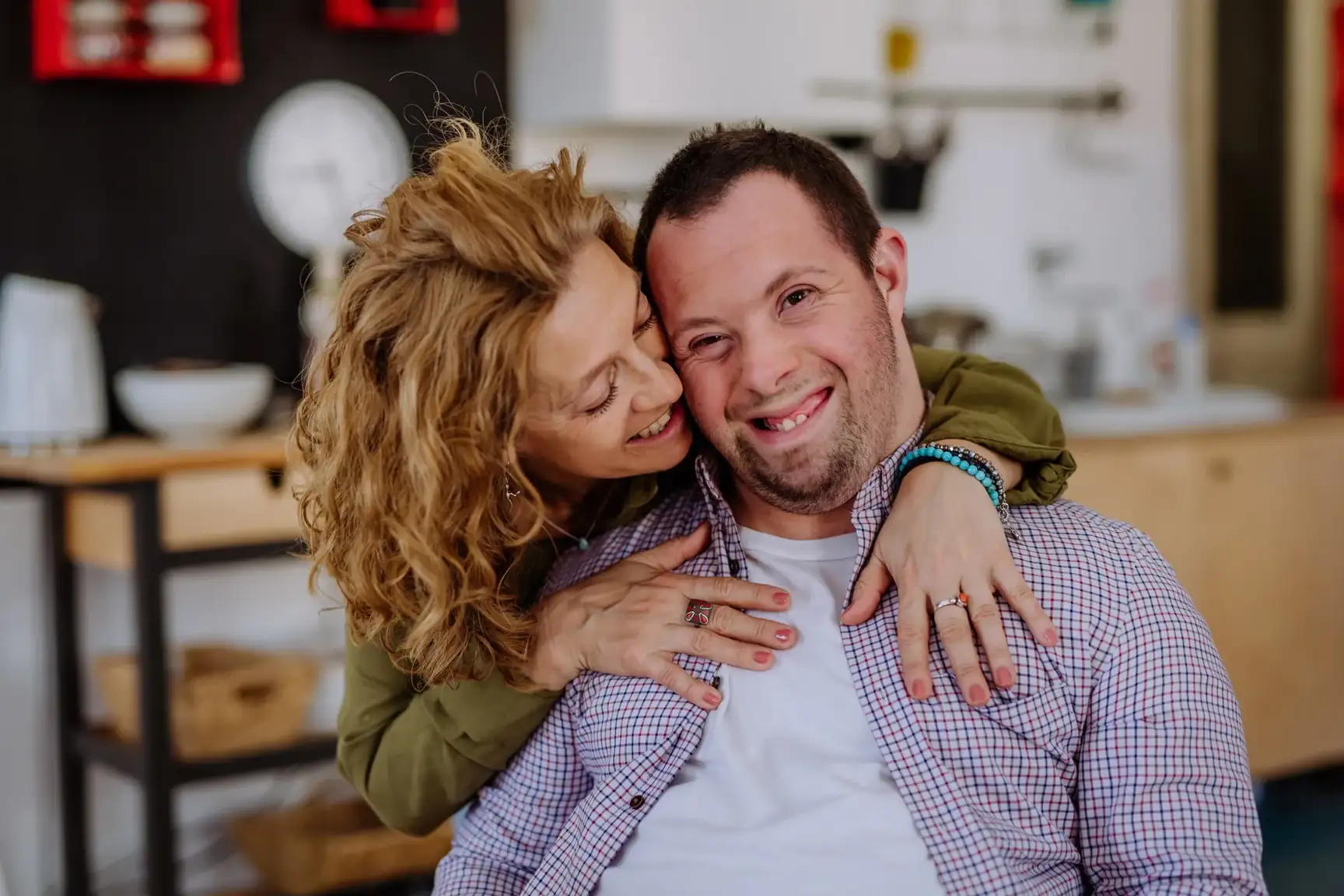
SeeBeyond Medicine recognizes that autism spectrum challenges affect the entire family, not only the individual receiving treatment. Caregivers participate in the intake evaluation, providing behavioral history and daily-function context that directly shapes protocol design. Post-treatment outcome assessments incorporate caregiver observations alongside objective clinical measures. Our health coach works with families to establish strategies that extend the benefits of TMS into home and school environments. Families at our Scarsdale, NY office and Greenwich, CT office describe meaningful shifts in their loved one's engagement, routine flexibility, and daily functioning following a treatment series.
Conditions Treated
Social Engagement and Communication
TMS targeting the temporoparietal junction may strengthen social cognition and perspective-taking. SeeBeyond Medicine measures baseline social functioning before and after each treatment series.
Benefits
Non-Invasive and Medication-Free
What to Expect
Your Journey
01.
1. Neurological and Behavioral Assessment
Your evaluation begins with neurological screening, behavioral history, seizure risk assessment, and baseline functional testing at SeeBeyond Medicine. Neurotransmitter testing — measuring baseline levels of GABA, glutamate, serotonin, dopamine, and norepinephrine — is conducted at this stage to inform the full protocol design.
02.
2. Personalized Protocol Design
Based on your assessment, SeeBeyond Medicine designs a deep TMS protocol targeting the brain regions most relevant to your functional goals. Sessions are typically scheduled 5 days per week for 4 to 6 weeks. Where appropriate, the protocol also integrates Calm IV therapy, acupuncture sessions, and health coach brain health sessions to support the neurological environment in which TMS operates.
03.
3. Supervised Treatment Sessions
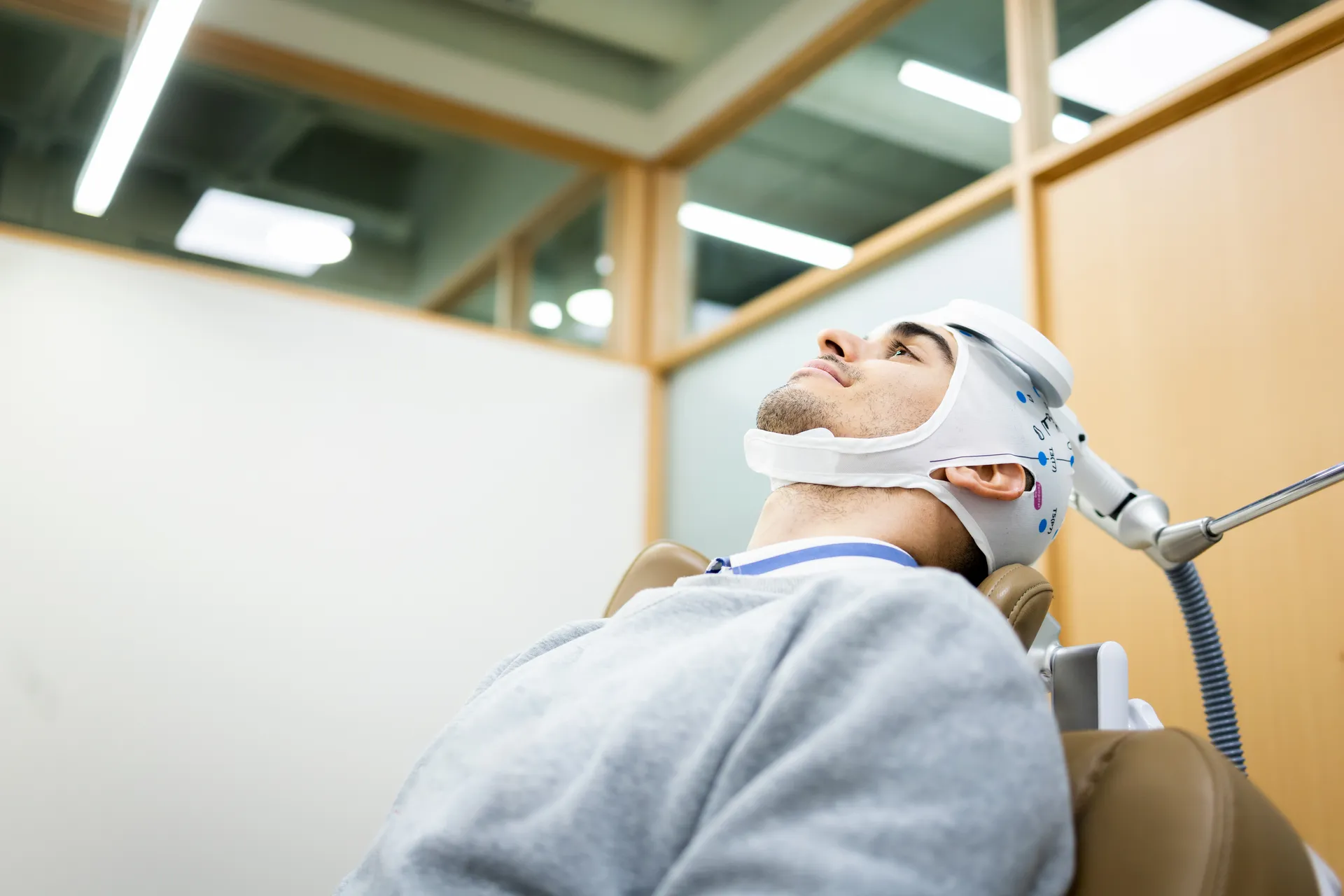
Each session lasts approximately 20 to 30 minutes at our Scarsdale, NY office or Greenwich, CT office. SeeBeyond Medicine's clinical team monitors comfort and response throughout every visit. Patients remain fully awake and alert and can resume normal activities immediately after each session.
04.
4. Outcome Measurement
Post-treatment functional assessments quantify your response. SeeBeyond Medicine uses objective measures and caregiver input to evaluate progress and guide maintenance decisions. Repeat neurotransmitter testing documents actual neurochemical changes alongside behavioral outcomes, providing a concrete record of how the protocol has affected your brain's function.
What Our Patients Say
What Families Experience
Real stories from patients who found answers.
Families working with SeeBeyond Medicine describe meaningful shifts in social engagement, reduced daily anxiety, and greater flexibility in routines following a TMS treatment series. Individual responses vary. Our team sets honest expectations during every evaluation.
Frequently Asked Questions
Common Questions
Is TMS safe for individuals on the spectrum?
TMS carries an established safety profile. SeeBeyond Medicine conducts thorough screening, including seizure history assessment, before initiating any protocol. Most patients tolerate treatment well.
What ages does SeeBeyond Medicine treat?
SeeBeyond Medicine evaluates TMS candidacy for adolescents and adults on the autism spectrum. Eligibility depends on neurological screening and ability to participate in the treatment protocol.
How many sessions are needed?
A standard course includes 20 to 30 sessions over 4 to 6 weeks. SeeBeyond Medicine adjusts the protocol based on your individual response and functional goals.
Will TMS change who my loved one is?
No. TMS does not alter personality or identity. SeeBeyond Medicine's protocols target specific functional circuits to support daily life, not to change the person.
What does TMS feel like during a session?
TMS is experienced as a gentle, rhythmic tapping sensation at the treatment site on the scalp. Most individuals describe it as tolerable and non-distressing. There is no anesthesia, no sedation, and no recovery period. Patients remain fully awake and alert throughout each session and can resume all normal activities immediately afterward.
Why does SeeBeyond Medicine combine TMS with functional medicine?
Autism-related challenges arise from multiple converging factors: circuit-level connectivity differences, neurotransmitter imbalances, nutritional gaps, mitochondrial function, and the gut-brain axis. TMS addresses the neural circuit component directly. Combining it with neurotransmitter testing, IV nutrient support, acupuncture, and health coaching creates a more favorable internal environment for lasting neurological change — and helps sustain improvements in social function and behavior well after the treatment course ends.
Will behavioral therapy still be needed after TMS?
Yes. TMS creates foundational changes in neural connectivity that can make behavioral interventions significantly more effective. Many families find that social skills and communication strategies that were difficult to implement despite intensive therapy become more accessible following TMS, because the underlying circuits are functioning more optimally. SeeBeyond Medicine recommends continuing ABA, speech therapy, occupational therapy, and social skills training as complements to TMS — not substitutes for it.
How quickly will improvements appear?
Response timelines vary based on symptom severity, baseline functioning, and individual neurological factors. Research suggests that improvements become more significant with an increasing number of sessions, with some individuals showing gradual enhancements throughout the treatment course. Effects may continue to develop in the weeks and months following treatment completion as neural plasticity and connectivity strengthen. SeeBeyond Medicine sets honest expectations during every evaluation and tracks progress throughout the program.
Related Services
Related Services at SeeBeyond Medicine
- TMS Therapy Overview — full program details
- TMS Developmental Disorders — related neuromodulation applications
- TMS Anxiety and Mood Disorders — for co-occurring anxiety
- Alpha Stimulation Therapy — complementary neuromodulation
Take the First Step
Your Next Step Toward Better Daily Function
Even if previous interventions have plateaued, deep TMS may offer additional functional improvement for individuals on the autism spectrum. SeeBeyond Medicine's experienced neuromodulation team in Scarsdale and Greenwich evaluates every patient individually.
Call 914-722-9440 or book your TMS autism support consultation today.