
Medically reviewed by Dr. Hyun Joon Lee, MD. Board-certified in Family Medicine, Integrative Holistic Medicine, and Obesity Medicine. Founder and Medical Director, SeeBeyond Medicine.
What Semaglutide and Tirzepatide Are
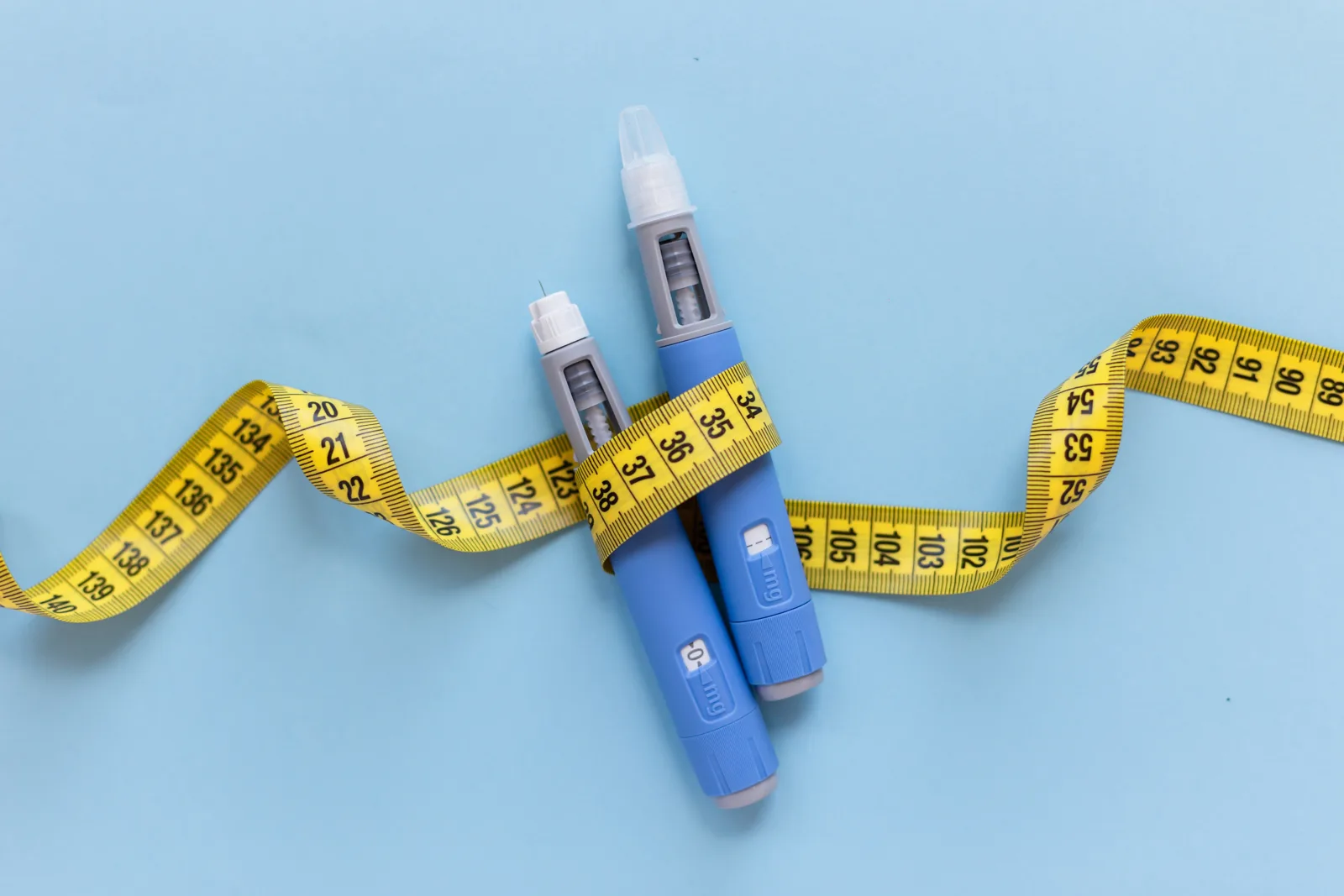
Semaglutide is a GLP-1 receptor agonist sold as Wegovy for weight management and Ozempic for type 2 diabetes. Tirzepatide is a dual GIP and GLP-1 receptor agonist sold as Zepbound for weight management and Mounjaro for diabetes. Both are once-weekly injections that act on appetite and blood sugar.
The shared label GLP-1 hides the real difference. Semaglutide acts on one receptor, while tirzepatide acts on two, and that extra target sits underneath most of the trial results below.
Both medications carry FDA approval for chronic weight management in adults, used alongside a reduced-calorie diet and increased physical activity. The Wegovy prescribing information and the Zepbound prescribing information set the same entry criteria by body mass index.
A BMI of 30 or greater qualifies on its own. A BMI of 27 or greater qualifies when at least one weight-related condition, such as high blood pressure or type 2 diabetes, is present.
How the Two Medications Work
Your gut releases GLP-1 after a meal. The hormone slows how fast the stomach empties and signals the brain regions that govern hunger, so fullness arrives earlier and lasts longer.
Semaglutide mimics that single hormone. It occupies the GLP-1 receptor and reproduces the appetite and blood-sugar effects your own gut hormone produces after eating.
Tirzepatide adds a second incretin target. It activates the GIP receptor alongside the GLP-1 receptor, which is why the Zepbound label classifies it as a dual GIP and GLP-1 receptor agonist rather than a GLP-1 drug alone.
GIP, which means glucose-dependent insulinotropic polypeptide, is the other major incretin hormone in this system. Cells that respond to GIP also help regulate food intake and fat metabolism.
Whether that second receptor fully explains the difference in results is still under study. The trials measure the outcome, not the mechanism behind every pound.
What the Weight Loss Trials Show
Read the numbers carefully before you rank the drugs. Two pivotal trials anchor the evidence, and one trial compared the medications directly.
Semaglutide rests on the STEP program. In STEP 1, adults with overweight or obesity and without diabetes took once-weekly semaglutide 2.4 mg or placebo for 68 weeks alongside lifestyle changes.
Mean body weight fell 14.9% with semaglutide against 2.4% with placebo. Most participants on the medication lost at least a tenth of their starting weight.
Tirzepatide rests on SURMOUNT. In SURMOUNT-1, participants with obesity and without diabetes took 5 mg, 10 mg, or 15 mg once weekly for 72 weeks.
Mean weight reduction reached 19.5% at the 10 mg dose and 20.9% at the 15 mg dose, against 3.1% with placebo. The trial authors described that degree of loss as unusually large for a weight medication.
Those two trials are not a direct comparison. They ran different lengths, enrolled different populations, and produced different placebo responses, so the two headline numbers do not line up cleanly.
One trial did compare them head to head. SURMOUNT-5 randomized adults with obesity and without diabetes to the maximum tolerated dose of each drug for 72 weeks.
Mean body weight change was 20.2% with tirzepatide and 13.7% with semaglutide. Waist circumference fell further in the tirzepatide group as well.
Three caveats belong with that result. The trial was open-label rather than blinded, it enrolled adults without type 2 diabetes, and greater weight loss is not automatically the same as better long-term health.
Comparing Side Effects and Tolerability
Nausea, vomiting, diarrhea, and constipation are the effects patients report most with both medications. They tend to be dose-related, tend to settle over time, and remain the leading reason people stop.
In the head-to-head SURMOUNT-5 trial, gastrointestinal effects appeared in both groups, and discontinuations for those effects were more common with semaglutide than with tirzepatide. Neither drug was free of them.
Some symptoms are not effects to ride out. Severe or persistent abdominal pain, signs of gallbladder trouble, and any change in mood or thinking need a same-week call, not a workaround.
Managing the routine effects is largely mechanical. Meal size, protein sequencing, hydration, and timing carry most of the load, and our guide to managing GLP-1 side effects covers the protocol in detail.
Dosing and How Treatment Ramps Up
Both medications are once-weekly injections, and both start low. The dose climbs in steps over several weeks toward a maintenance level rather than starting at full strength.
The slow climb exists for tolerability. Gastrointestinal effects cluster at each dose increase, and a patient who escalates too quickly often abandons a medication that would have worked at a gentler pace.
The Zepbound label sets a stepwise escalation schedule, and semaglutide follows the same general shape. Your physician sets the pace against how you tolerate each step.
Ask about dosing rather than adjusting on your own. Nothing here is a dosing instruction, and splitting or importing doses outside a prescription reintroduces the risks these schedules are built to avoid.
How a Physician Chooses Between Them
Finally, a decision that rests on your chart rather than the headline number. The better medication is the one that matches your history, your other conditions, your tolerance, and your coverage.
Both labels carry the same absolute contraindication. Neither drug is appropriate with a personal or family history of medullary thyroid carcinoma, or with Multiple Endocrine Neoplasia syndrome type 2.
Baseline labs shape the choice before the first injection. A comprehensive blood panel reads thyroid, fasting insulin, and metabolic markers that change what response you can expect from either medication.
Two patients at the same weight can sit at opposite ends of the insulin resistance spectrum. That difference belongs in the decision, which is why physician-supervised GLP-1 therapy at SeeBeyond Medicine starts with testing rather than a prescription pad.
Nutrition and primary care sit in the same plan. Individual optimal nutrition profile testing sets protein and micronutrient targets for the deficit ahead, and holistic primary care keeps the rest of your health in view while the medication works.
There is no generic one size fits all answer between these two drugs. The pillar guide to GLP-1 medical weight loss covers the full program, from candidacy through maintenance.
Key Takeaways
- Semaglutide is a GLP-1 receptor agonist, while tirzepatide adds a second target, the GIP receptor, and acts on two pathways.
- In the head-to-head SURMOUNT-5 trial, tirzepatide produced greater average weight loss than semaglutide over 72 weeks.
- Both medications share gastrointestinal side effects and the same absolute contraindications, and both escalate slowly to stay tolerable.
- Greater average weight loss in a trial is not the same as the right choice for your history and coverage.
- The decision belongs to a physician reading your labs, not to a comparison of two percentages.
Related Resources
Start with the pillar, then the spokes that go deeper on the parts this comparison introduces.
- GLP-1 medical weight loss guide is the full overview of mechanism, candidacy, trials, and maintenance.
- Managing GLP-1 side effects covers nausea, constipation, and the symptoms that warrant a call.
- Preventing muscle loss on a GLP-1 covers protein targets, resistance training, and body composition tracking.
- Stopping a GLP-1 and keeping weight off covers tapering, maintenance dosing, and the regain data.
For the clinical side of the program:
- Physician-supervised GLP-1 therapy describes how each agent is prescribed and monitored.
- Comprehensive blood panel and individual optimal nutrition profile testing cover the workup that precedes a prescription.
- Holistic primary care keeps the rest of your health in view during treatment.
Choosing between semaglutide and tirzepatide is the easy part to describe and the hard part to get right alone. The variables that decide the outcome are your labs, your other conditions, your tolerance, and the plan attached to the prescription.
If you want those variables mapped before you start, schedule a consultation at our Scarsdale, NY office in Westchester County or our Greenwich, CT office in Fairfield County. Telemedicine visits are available for intake and follow-up.
This article is for general education and does not replace a medical evaluation. Treatment decisions depend on your history, medications, and lab work. Speak with a qualified clinician before starting, stopping, or changing any therapy.